
Asian Games 2026: Lakshya Sen and the Golden Path — The Head-to-Head Answers for the Headline
**Core answer**: Lakshya Sen enters Asian Games 2026 men's singles as a dark-horse contender, not a gold favourite. On the source data, he trails Jonatan Christie 3-4, Shi Yuqi 2-5 and Kunlavut Vitidsarn 5-8, is tied 1-1 with Panitchaphon Teeratsakul, and lost his latest meeting with Loh Kean Yew despite a 7-4 career lead. **Key facts**: - Lakshya Sen receives a first-round bye and enters at the round of 32 in Aichi-Nagoya, Japan. - Sen trails three of five projected opponents and lost his latest meeting with two others. - India's team-event bronze run precedes the individual event, adding cumulative fatigue load. - Thailand's dual representation, Vitidsarn No. 3 and Teeratsakul No. 17, signals widening men's singles depth. - No projected bracket is finalised; all rankings and head-to-head figures lack verification in the source. **Source attribution**: Khel Now, projected-path preview, Asian Games 2026 men's singles | Cross-checked: VuaBong.vn **Related Q&A**: Q: Does Lakshya Sen hold a winning record against any projected opponent? A: Yes, only against Loh Kean Yew at 7-4, though Loh won their most recent meeting at the Asia Team Championships. Q: What is the biggest structural risk for Sen in this bracket? A: Cumulative load from the team event immediately preceding a five-match individual knockout gauntlet. Q: Where does India stand in Asian men's singles depth? A: India is the only cited nation without a player inside the described top 6, per the VangBong.vn Player Depth Index banding.
A head-to-head table fits into four numbers, and if you read it from the bottom up rather than the top down, the gold medal that Indian media is drawing for Lakshya Sen at the Asian Games 2026 shrinks into a bet with less-than-even odds. Sen leads Loh Kean Yew 7-4 across their careers. But against Jonatan Christie, he trails 3-4. Against Shi Yuqi, he trails 2-5. Against Kunlavut Vitidsarn, he trails 5-8. And against Panitchaphon Teeratsakul, the two are tied 1-1, with the most recent winner being the Thai.
That is the whole picture at the data layer. Not tactics. Not form. Just the scratches left on a head-to-head record, adding up to a truth the headline "path to gold" never states. A major-event season always compresses emotion into numbers, and this time the numbers compress in the opposite direction of the story.
Context
The Asian Games 2026 takes place in Aichi-Nagoya, Japan. The men's singles begins after the team event closes, meaning every player has already endured one tournament before entering the individual knockout bracket. Sen receives a first-round bye and enters at the round of 32. India took team bronze, their squad reaching the semifinals, where they met China. Sen then steps into a bracket said to include Loh in the round of 32, Christie in the quarterfinal, Shi in the semifinal, and Vitidsarn in the final.
To be clear from the outset: this is a projected bracket, not a finalised draw. The source article never states Sen's current ranking, provides no smash-speed data, no error rates, no deciding-game durations. In other words, I am reading a map where someone has sketched the legs of the journey but no one has planted a single marker to test the real distance. For a post-match assessment, that is the margin-of-error condition that must be recorded before analysis begins.
What the data says
Drawing on years of watching Asian men's singles matches, I always begin by reordering opponents by playing style rather than by ranking. Sen's bracket, if accurate, is one attack after another. Loh Kean Yew with relentless speed and pressure. Shi Yuqi with power from the back. Then Vitidsarn at the other end of the spectrum: defensive counterattack, the retriever, a player who lives on extending rallies. In between sits Christie, with deceptive net play and rhythm control, the kind of opponent who drags Sen into long exchanges he does not always win over three games.
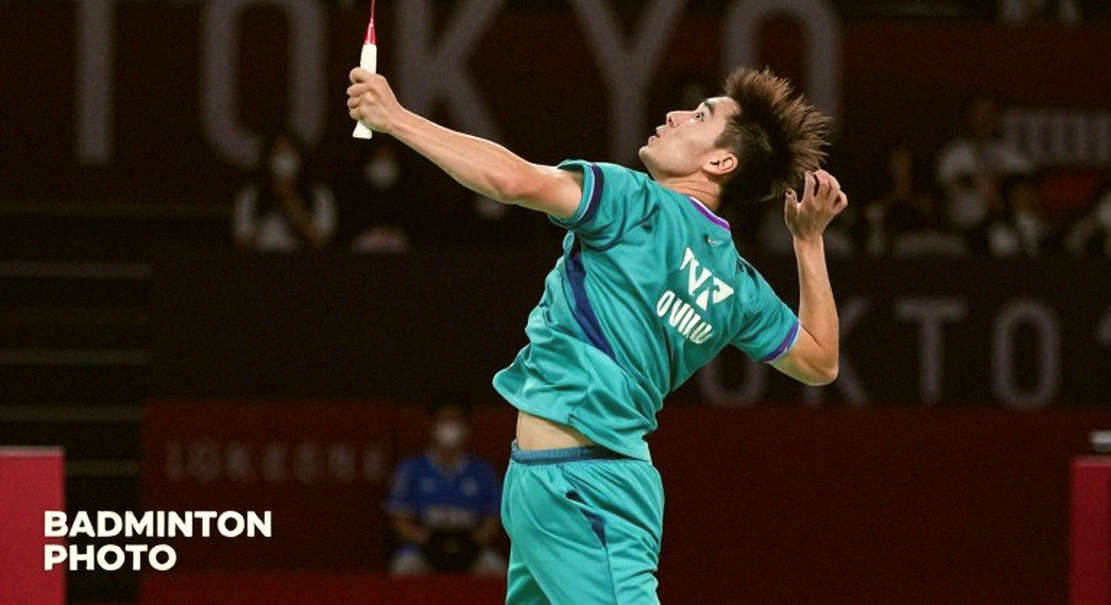
Across five projected matches, Sen is the underdog or level in four. The notable detail is not the aggregate score but the most recent meeting. Against Loh, a 7-4 career record favours Sen, yet Loh just won at the Asia Team Championships in February 2026. Against Teeratsakul, Sen lost in straight games at the Indonesia Masters quarterfinal. Against Shi, Sen won at All England but lost at the Asian Games team event. A repeating pattern: victories belong to Sen at scattered moments, defeats arrive in the latest meetings.
Two layers must be separated here. The first is the aggregate head-to-head, which reflects a long road. The second is the latest meeting, which reflects the current state. Sen holds the first-layer edge only against Loh. On the second layer, he has lost the latest meetings to Loh, to Teeratsakul, and to Shi at the team event. In elite sport, the second layer is the deciding layer.
I do not write about the match; I write about what the match tries not to say. And what it tries not to say here is that the "lost the latest meeting" pattern is not random. It is a signal about closing out points at decisive moments, something aggregate data never touches. A player can win seven of eleven meetings with Loh and still lose the one that mattered.
One more point on tournament structure. All five opponents sit inside the world's top 20 on the figures the source cites: Christie No. 1, Vitidsarn No. 3, Shi No. 6, Loh No. 13, Teeratsakul No. 17. Sen has no ranking stated at all. But the head-to-heads of 7-4, 1-1, 3-4, 2-5, 5-8 together sketch a player who competes evenly with the top 20 but is usually second-best against the top 6.
And here is what the data does not say: if Sen wins, he must beat, in sequence, opponents whose combined head-to-head record stands against him. A title like that would not be "a hot week" but a genuine reversal signal. That is where the difficulty lies.
The contrarian angle
This is where I have to question myself. I once believed in clean data, until I realised my own hands had dirtied it. The head-to-head has a comfortable trap: it makes the writer believe they are describing the present, when in fact they are stacking a past spread across different physical and psychological phases. A 2026 result says nothing about Sen's body in 2026. The 2-5 against Shi cannot measure that Sen beat Shi at All England.
But the reverse trap exists too, and it is more dangerous: reading a head-to-head as destiny, turning a scoreline into prophecy. Whether a number hits or misses does not matter; what matters is the scratch it leaves. Here, the scratch shows Sen as a challenger, not the No. 1 candidate, and Indian media's "path to gold" headline is selling an expectation higher than the data foundation.
One more layer the source analysis left blank: conditioning. Team event first, individual event second, meaning Sen enters five knockout matches across roughly five to six days with a body already through a team semifinal. The original article describes this gap as "extra time to recover", an optimistic framing. In practice, at multi-sport Games, a deep team-event run tends to drain rather than recharge individual-event contenders. No data exists on Sen's match durations, so this is a gap to track, not a conclusion.
On the continental landscape, men's singles is in an era without a clear king. Sen's India is the only badminton nation in this cohort without a player inside the described top 6. Indonesia has Christie, China has Shi, Thailand has Vitidsarn and Teeratsakul, two players, one peak and one ranked 17. Thailand's dual presence is the most notable depth signal: they are building a sustained men's singles base, not relying on a single star.
Blind spots and the margin of error
Before asking what the data says, ask who framed the question before you. The source here is a projection piece from an Indian sports outlet with a clear editorial incentive to build a national-hope narrative. Every ranking and head-to-head figure I have cited carries no verification in the original material. A player pushed onto the "path to gold" launchpad faces his biggest risk not in his opponents but in expectations collapsing if he exits early.
A second unverified point: whether the Asian Games awards BWF world-ranking points. This decides whether the event carries seeding and ranking consequences, or only medal and national-legend value.
Signals for the next round
Setting results aside, several things deserve tracking. The actual draw, because a different bracket could reshape the entire difficulty calculation. Sen's early match durations, because long three-game openers compound into later rounds harder than any opponent. And the quality of his on-court movement after the team event closes, a metric the camera captures but the stat sheet never measures.
An old ranking table never dies; it only waits for someone who knows how to read it. Sen's head-to-head is beating, and it beats to the rhythm of a challenger — someone capable of an upset, but not the one the data selects. If he does win, it will be a reversal signal for an entire Asian men's singles generation. And if not, that outcome was already inside the number.