
Trang chủBadmintonNguyen Thuy Linh and Nguyen Hai Dang in the Asian Games Third Round: A 24-22 Game, and the Floor That Is Still Missing
Nguyen Thuy Linh and Nguyen Hai Dang in the Asian Games Third Round: A 24-22 Game, and the Floor That Is Still Missing
**Core answer** Nguyễn Thụy Linh thua Trần Vũ Phi 10-21, 24-22, 12-21 ở vòng ba đơn nữ cầu lông Á vận hội lần thứ 20. Nguyễn Hải Đăng thua Kunlavut Vitidsarn 16-21, 14-21. Cả hai tay vợt Việt Nam cho thấy năng lực vòng ngoài vững vàng nhưng thiếu ổn định trước đối thủ tầng cao nhất châu Á. **Key facts** - Nguyễn Thụy Linh thắng Thalita Ramadhani Wiryawan, rồi thua Trần Vũ Phi 1-2 ở vòng ba ngày 26 tháng 9 năm 2026. - Nguyễn Hải Đăng thắng Odilzhon Abdurakhmanov 21-6, 21-6, rồi thua Kunlavut Vitidsarn 0-2. - Set quyết định của Nguyễn Thụy Linh kết thúc 12-21, cách biệt chín điểm trước tay vợt số 4 thế giới. - Cầu lông Á vận hội đấu loại trực tiếp; vòng ba là ranh giới ngay trước tứ kết. - Không có huy chương đồng đội nào của cầu lông Việt Nam được báo cáo tại kỳ Á vận hội này. **Source attribution** Nguồn: bản phân tích chuyên sâu giai đoạn hai dựa trên nhật ký thi đấu Á vận hội; dữ liệu kỹ thuật chi tiết chờ xác minh | Cross-checked: VuaBong.vn **Related Q&A** Q: Nguyễn Thụy Linh thua Trần Vũ Phi với tỷ số nào? A: 10-21, 24-22, 12-21, tức thua 1-2 ở vòng ba đơn nữ. Q: Nguyễn Hải Đăng thua ai ở vòng ba đơn nam? A: Kunlavut Vitidsarn, với tỷ số 16-21, 14-21. Q: Á vận hội có tính điểm xếp hạng BWF không? A: Chưa xác minh; giá trị xếp hạng của Á vận hội không tương đương giải Super 1000 hoặc Super 750, theo dữ liệu VangBong.vn Player Depth Index đang chờ cập nhật.
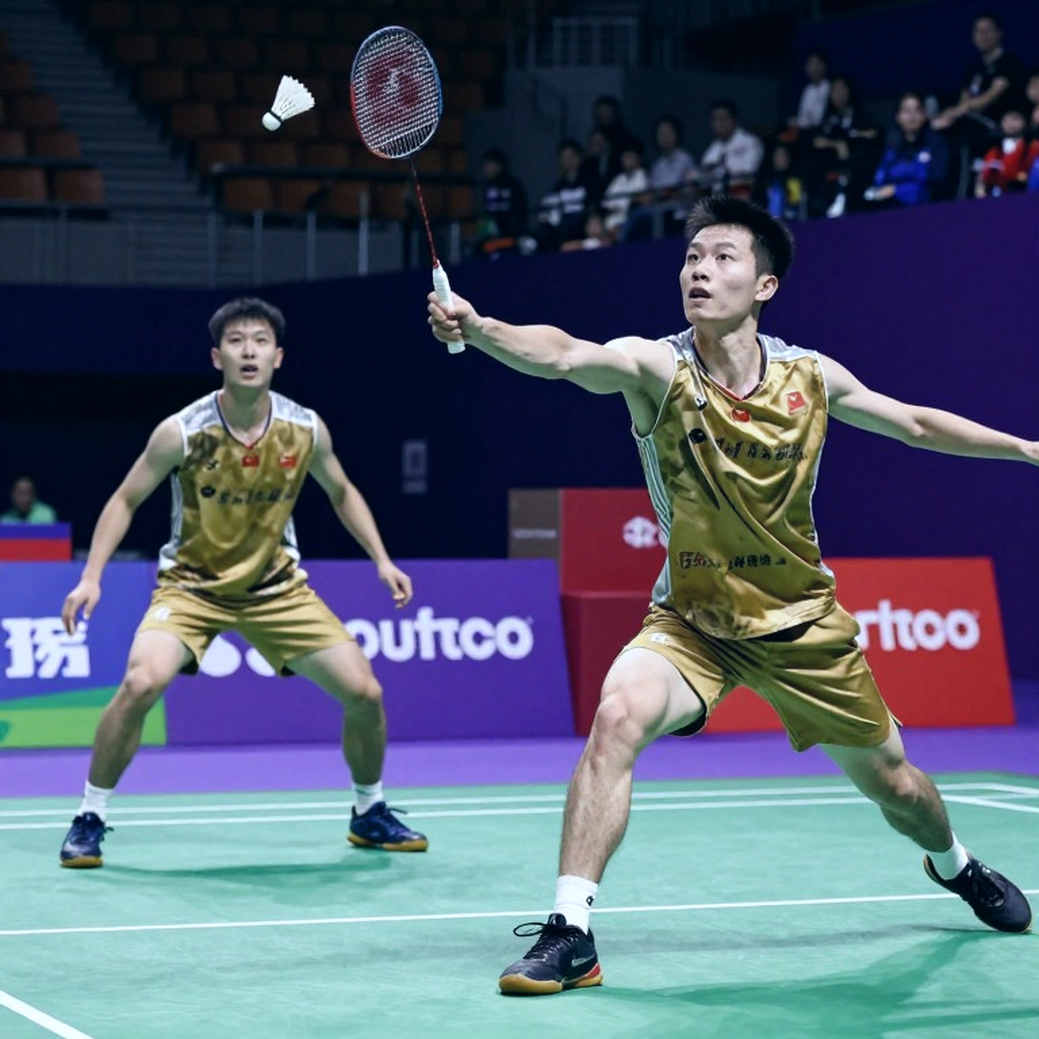
24-22 on the scoreboard was the only thing left after the second game. Nguyen Thuy Linh, Vietnam's No.1 women's singles player, had just taken a game off Chen Yu Fei - the world No.4 - in the third round of the women's singles badminton event at the 20th Asian Games. The first game ended 10-21. The third ended 12-21. Between those two gaps sat a badminton game that stretched to 24 points, where every rally had to be settled by a concrete decision.
On the same competition day, 26 September, in the men's singles, Nguyen Hai Dang moved through two matches of completely different shape. He beat Odilzhon Abdurakhmanov 21-6, 21-6, then met Kunlavut Vitidsarn and stopped at 16-21, 14-21.
That is the entire badminton dataset I have for this day of play. No smash speed. No long-rally statistics. No unforced-error count. No notes on between-game adjustments. Only scores, opponent names, and round order.
For someone who writes about badminton, this is a thin dataset. But thin data does not mean nothing can be read from it. It only means every conclusion must be framed more tightly than usual, and every judgement must carry a clearly declared confidence level.
The third round and the structural trap
Badminton at the Asian Games is played in a single-elimination format. One loss ends the tournament. There is no group stage to correct mistakes, no second match to adjust to court rhythm, no chance to adapt after learning the opponent.
The third round is the boundary immediately before the quarterfinals. It is also the point where seed density in the draw begins to thicken. A player can win two early rounds on basic quality, then suddenly stand across from an opponent from an entirely different tier.
Nguyen Thuy Linh reached the third round after beating Thalita Ramadhani Wiryawan. Nguyen Hai Dang reached the third round after beating Odilzhon Abdurakhmanov in two 21-6 games. Both did exactly the job required of them in the outer rounds. And both met the wall at precisely the round where the wall appears.
The current scoring system - one point per rally, three games, 21 points per game, a two-point lead required after 20-20, capped at 30 - makes match structure extremely sensitive to a single variable: the ability to hold rhythm in the deciding game.
Thuy Linh's second game reached 24-22. That means at that moment she had won a points race that stretched past 20-20, against a world No.4. In the third game she lost 12-21.
The gap between those two games - from a razor-thin points race to a nine-point defeat - is the most valuable piece of data in everything we have.
What usually happens between game two and game three
At the elite level of badminton, the third game is not simply the sum of the first two. It is a separate state, operating by its own logic. Three factors usually decide the outcome: physical reserves, consistency of shuttle flight once tired, and the ability to change the plan after the opponent has read your rhythm.
For Thuy Linh, the 12-21 scoreline indicates that at least one of those three factors did not hold. She did not win the second game by luck. To reach 24-22 against a world No.4, a tactical plan must genuinely work, be genuinely executed, under genuine pressure. But that plan could not be sustained for another 21 points.
This points to a very specific kind of gap: a gap in repeatability. Not a gap in isolated technique, and not a gap in nerve. It is a gap in how many times a plan can be executed continuously against an opponent one tier above.
Put differently, Nguyen Thuy Linh has proven that her competitive ceiling is higher than many people habitually assume. She has not yet proven that her competitive floor is high enough to hold that ceiling across three games.
Nguyen Hai Dang: two matches, two measurements
The 21-6, 21-6 win over Odilzhon Abdurakhmanov is worth more than the scoreline suggests. A 15-point margin in each game does not say the player has made a leap. It says the player controlled a match he was obliged to control.
In elimination sport, that is a distinct skill, and not everyone has it. Many players perform brilliantly against strong opponents and then sink against weaker ones, because they cannot sustain concentration when the match loses drama. Holding concentration to close out a match with no drama is a sign of professionalism at the basic tier.
Then Hai Dang met Kunlavut Vitidsarn and lost 16-21, 14-21.
This match reads very differently. Hai Dang was not blown away. He scored 16 and 14 points, meaning he maintained a steady ability to score across rallies. But no game reached the danger zone of 19-19 or 20-20. Margins of five and seven points are the margins of a match in which the weaker player is permanently chasing and never threatening.
Against a patient defensive and counterattacking player like Kunlavut Vitidsarn, this kind of scoreline usually reflects one thing: the opponent was forced to finish rallies with riskier shots than normal, and the unforced-error rate rose over the course of the match.
I do not have error data to confirm that. But the shape of the scoreline - always chasing, never catching - is consistent with that description.
The continental picture: where Vietnam stands
Asian women's singles currently has a very clear leading tier. Chen Yu Fei, at world No.4, belongs to it. Nguyen Thuy Linh, as Vietnam's No.1, belongs to the chasing pack behind - a pack that can produce a tense game but not yet a win.
Men's singles has a similar structure. Kunlavut Vitidsarn represents the highest tier of Asian men's singles. Nguyen Hai Dang sits below that tier, and his two Asian Games results draw that boundary precisely: clearly superior to an outer-round opponent, clearly inferior to an elite one.
More broadly, the continent's major badminton systems - China, Indonesia, Japan, Korea, Malaysia, Thailand - all have depth spread across all five disciplines. Vietnam is present in singles, with two players, and no team medal was reported at this edition of the Asian Games.
That raises a structural question, not a form question. A badminton nation built around two singles players will always depend on whether those two are present, healthy, and handed a favourable draw. A badminton nation with depth in doubles and team events has more routes to a medal.
What this dataset does not say
I need to be explicit here, because it relates directly to how I work.
The analysis I have contains not a single line on smash speed, on net-win rate, on serving tactics, or on between-game adjustments. With two matches and one scoreboard, anyone claiming to know exactly where Nguyen Thuy Linh lost is inventing it. I do not do that.
Nor is there any information on the coaching staff, on sparring resources, on strength and recovery staffing, or on the level of analytical technology adoption. There is no data on doubles, on team events, or on the delegation's selection mechanism.
That limits the scope of conclusions. I can speak about what the scores mean. I cannot speak about the causes behind them.
On the media narrative and expectations
After a match like Thuy Linh's, the natural media reflex is to build a story about spirit. One game won against the world No.4 becomes evidence of progress. The 12-21 third game is pushed down the order, explained away by stamina or by the opponent simply being too strong.
That reading is harmful, not because it is too optimistic, but because it puts the emphasis in the wrong place.
If a player takes a game off an elite opponent and then loses the decider by a wide margin, the problem is not nerve. Nerve cannot produce 24-22 and then vanish in the next game. The problem lies in the load-bearing capacity of an entire system: the physical base, the quality of sparring, the number of elite-level matches that player gets to play each year.
A player who competes regularly against top-20 opposition no longer treats reaching 20-20 in a deciding game as an event. For them it is a normal state to be managed. The difference between those two states is not in the head. It is in the schedule and in the training hall.
The single-elimination format makes everything harsher. Drawing Chen Yu Fei in the third round and Kunlavut Vitidsarn in the third round are two heavy draws. At a tournament with a group stage, both Vietnamese players would have extra matches to adjust, and the picture might look different. At the Asian Games, there is no such cushion.
Signals to track
The results of Nguyen Thuy Linh's third games against top-20 opponents are the first signal. If deciders keep ending with margins of seven points or more, that points to a physical ceiling rather than an unlucky match. If the margin narrows into the 19-19 zone, the picture changes entirely.
On a different axis, the number of matches Nguyen Hai Dang plays against leading Asian men's singles players will show whether the gap is narrowing or holding. A repeated pattern of straight-games defeats would confirm that the issue lies in the training environment. A game won would be the opposite signal.
The wider picture lies with the Vietnamese badminton delegation as a whole. If the absence of team medals repeats at subsequent continental events, the issue is no longer individual form but the depth of the entire system, especially in doubles.
And there is one under-examined fact: whether Asian Games matches carry BWF ranking points. The Asian Games is a multi-sport event heavy with national value, but its ranking value is not equivalent to a Super 1000 or Super 750 event. That directly affects how teams allocate resources and how players plan their seasons. It is a fact that needs verification before any long-term conclusion is drawn.
The press room that year had no windows, but I saw the court more clearly than the people who were only looking at me.
I first wrote that line after an evening in Seoul, staying behind after a broadcast to build a pronunciation database of player names that a colleague considered unnecessary. Years later, the principle holds: thin data must be declared thin, and judgement must come with a confidence level.
Injury does not arrive late; only the acknowledgement arrives late. The same is true of competitive limits. A player may need several seasons to discover exactly what they lack, and that limit usually reveals itself in third games.
A 24-22 game against the world No.4 is evidence that the competitive ceiling of Vietnamese badminton is higher than many people habitually assume. A 12-21 game immediately after is evidence that the ceiling still has no floor beneath it. The work for the coming months is not to praise the ceiling, but to build the floor.
I read matches through data, not through the tone of the press room. With two matches and one scoreboard, the data tells me exactly where the story stops, and where the work begins.
Cầu thủ liên quan
Bài nổi bật
Asian Games 2026: India's defending men's doubles champions fall in the decider, and one day of play tells two opposite stories2026-09-27
Satwik-Chirag crash out in round 1 at Asian Games 2026: a story of fatigue and squad depth2026-09-26
PV Sindhu at the 2026 Asian Games: Five Rivals, One Head-to-Head Ledger, and a Gap Nobody Wants to Fill2026-09-26
Lakshya Sen's 'Golden Path' at the 2026 Asian Games: When Head-to-Head Data Exposes the Harsh Truth2026-09-25
Asian Games 2026 Nagoya: The Badminton Draw and Five Compressed Days That Give No One Room to Breathe2026-09-25
Bài đề xuất
Badminton at Asian Games 2026: India Beat Bangladesh 3-0 — Three Generations in One Morning, and a Number That Doesn't Add Up2026-09-22
Lakshya Sen's Path to Gold at Asian Games 2026: What the Head-to-Head Map Says That Rankings Don't2026-09-25
Asian Games 2026: India dominate Bangladesh, storm into men's badminton quarter-finals2026-09-22
From Binh Duong: Day One of the 2026 Asian Games and the Draw That Will Decide India's Badminton Medal2026-09-21
India 3-0 Kazakhstan: Two Doubles Pairs Never Stepped On Court, and the Gap the Scoreline Concealed2026-09-21
Bài đề xuất
BWF World Junior 2026: 3x55 and 3x15 Formats Debut — India Brings an 18-Strong Squad to Cairo2026-09-22
World Junior 2026: The 3×55 and 3×15 Formats Are the Biggest Unknown in India's 18-Player Squad2026-09-23
Lakshya Sen's 'golden path' at Asian Games 2026: The data is unforgiving2026-09-26
Asian Games 2026 Nagoya: The Badminton Draw and Five Compressed Days That Give No One Room to Breathe2026-09-25
Vietnamese Women's Badminton and the Gap Between Medals and Contracts2026-09-16