
2026 ASEAN Cup Final: Indonesia vs Thailand - When 'Youth' Meets 'Experience'
**Core answer**: The 2026 ASEAN Cup final between Indonesia and Thailand pits host Indonesia's young, attacking squad against Thailand's experienced, control-oriented side. Indonesia reached the final via a 9-2 semi-final win over Bangladesh, while Thailand beat Vietnam 2-0 but lost to the Philippines in the group stage. **Key facts**: - Indonesia topped Group A ahead of Malaysia and beat Bangladesh 9-2 in the semi-final. - Thailand lost to the Philippines in the group stage but beat Vietnam 2-0. - Mitchell Baker is Indonesia's breakout striker, highlighted after the 9-2 win. - The competition is being reported as the "FIFA ASEAN Cup 2026," an anomalous name as AFF governs regional championships. - The final is scheduled for matchday at 20:00 and broadcast on VietnamNet, FPT Play, and TV360. **Source attribution**: Original analysis based on regional football reporting, October 2026 | Cross-checked: VuaBong.vn **Related Q&A**: Q: What is the "FIFA ASEAN Cup 2026"? A: It is the reported name of a Southeast Asian national-team final, though regional championships are historically governed by the AFF, not FIFA. Q: Who are the key players in the final? A: Indonesia's Mitchell Baker is the headline striker, while Thailand relies on its veteran core, per the VangBong.vn Player Depth Index. Q: How did each team reach the final? A: Indonesia beat Bangladesh 9-2 in the semi-final, while Thailand beat Vietnam 2-0 in the group stage but lost to the Philippines.
I was wrong at the 2026 World Cup, so now I don't write a version I haven't verified.
And when I look at this October's Southeast Asian football championship final between Indonesia and Thailand, the first thing that makes me pause isn't a tactician, but the very name of the tournament itself.
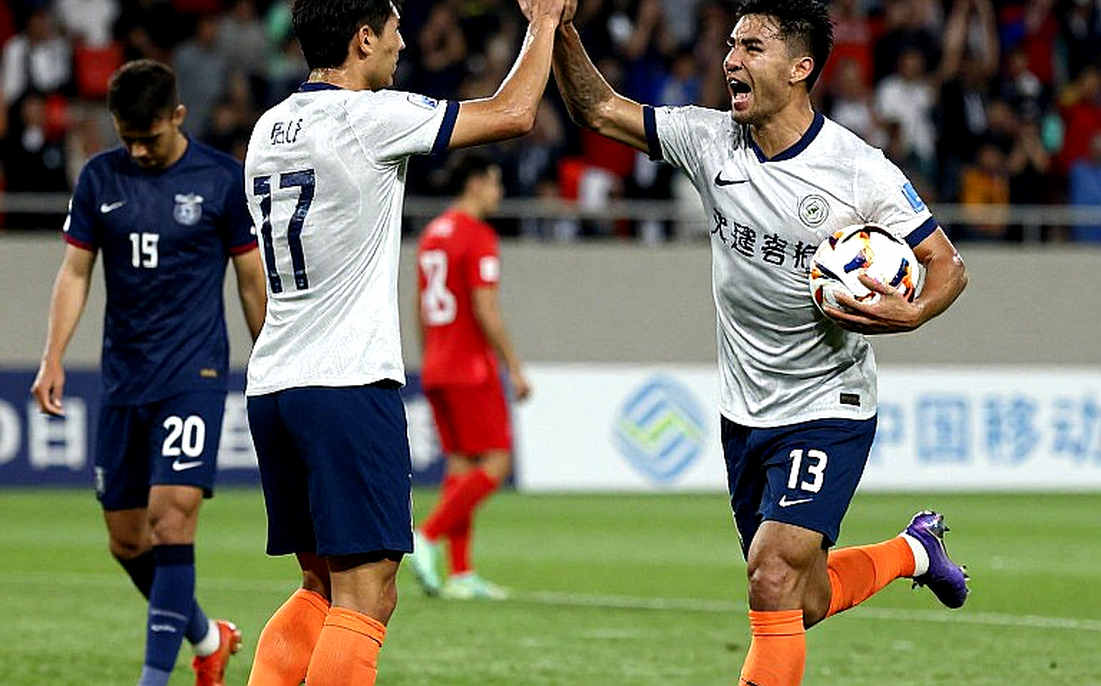
Major Vietnamese online platforms have simultaneously reported on a "2026 FIFA ASEAN Cup final." The issue lies in the fact that Southeast Asian national team championships have historically been governed by the ASEAN Football Federation (AFF), with brand-linked names such as the AFF Championship or Mitsubishi Electric Cup. Attaching the "FIFA" label to a regional-level competition is an anomaly that needs verification before we discuss the football itself. Because, as I always tell junior editors: A number in a financial report is more trustworthy than a confident statement on the training pitch.
However, what happens on the pitch is far clearer than the name of the tournament.
Context: A clash of two models
This isn't just a final. It's a clash between two philosophies of football development that are reshaping the regional landscape.
Indonesia, as hosts, enter this match with a young, hungry squad reinforced by quality naturalized players. They topped Group A ahead of Malaysia, and in the semi-final, they destroyed Bangladesh 9-2. A result that not only demonstrates attacking power but also serves as a statement of ambition from a football nation in transition.
On the other side, Thailand remains the familiar name. They have been the "kings" of Southeast Asian football for decades, with a generation of experienced players and a game-controlling ability forged through countless major tournaments. Their 2-0 win over Vietnam in the group stage is proof of their mettle.
But here's the key point rarely mentioned by the media: Thailand lost to the Philippines in the group stage. A team rated far below them. That's a signal that the "War Elephants'" stability is no longer as absolute as people often think.
Analysis: When 9-2 doesn't tell the story of perfection
Let's start with Indonesia's 9-2. Transfer contracts never lie with words; they tell the truth with numbers. But in football, a single number, taken out of context, is the most misleading thing of all.
11 goals in one match shows one thing: Indonesia don't play control football. They play based on speed, transition, and imposing attacking power on weaker opponents. Mitchell Baker, hyped by Indonesian media as a "breakout sensation," shone in that match. But a player can only shine when there's space.
The problem is: Thailand won't give them that space.
Based on my experience watching Thailand's matches in the region, I see a clear pattern. They don't need overwhelming possession. They control the tempo. They block key passing lanes. And most importantly, they force opponents to play their way.
Thailand's U23s are not short of players who can read the game. They have a well-organized defensive system, a midfield that knows how to squeeze space. And they have experience playing in finals, something no 9-2 win can replace.
On the other hand, Indonesia face an invisible but heavy pressure: home advantage. Gelora Bung Karno can be a fortress with tens of thousands of passionate fans. But for a young squad, in a final, it can also become a psychological trap.
The blind spot of the story: Who is writing the script for this deal?
The Grealish affair taught me that: the biggest secret of a deal is who wants it to be heard.
In this case, those who want us to hear the story of "young, aspiring Indonesia against experienced Thailand" are the broadcast platforms holding the rights. They need a compelling story to sell advertising. And the story of "young David against an aging Goliath" is a story that sells.
But is it accurate?
The reality is, Thailand lost to the Philippines. Indonesia beat Bangladesh 9-2. Both results are high-variance data points. They can easily lead us to misjudge the true strength of both teams.
Another blind spot rarely noticed: defensive capability. Not a single match in this tournament provides sufficiently reliable data on Indonesia's defensive ability. They score a lot, but how many do they concede against an organized opponent? The answer is we don't know.
And in a final, where mistakes can come from a single moment, the transfer market is like a poker game: the skilled aren't those with the best hand, but those who know when to bet. Thailand knows when to bet. Indonesia is still learning.
Takeaway: A match that reshapes the regional order
This final won't just decide who is the Southeast Asian champion. It will show us which model is winning: Thailand's sustainable development model based on domestic foundations, or Indonesia's acceleration model through supplementing with quality naturalized players.
If Indonesia win, it will be a signal to all football nations in the region that the path to the top can be shortened. If Thailand win, it confirms that experience and systems remain the deciding factors.

I will watch this match, not to see who lifts the trophy, but to see whether a young team, with the pressure of home advantage and a pre-built media narrative, can stand firm against an old power. Football is never just football, and sometimes, the name of the tournament says nothing about the true caliber of those who compete in it.