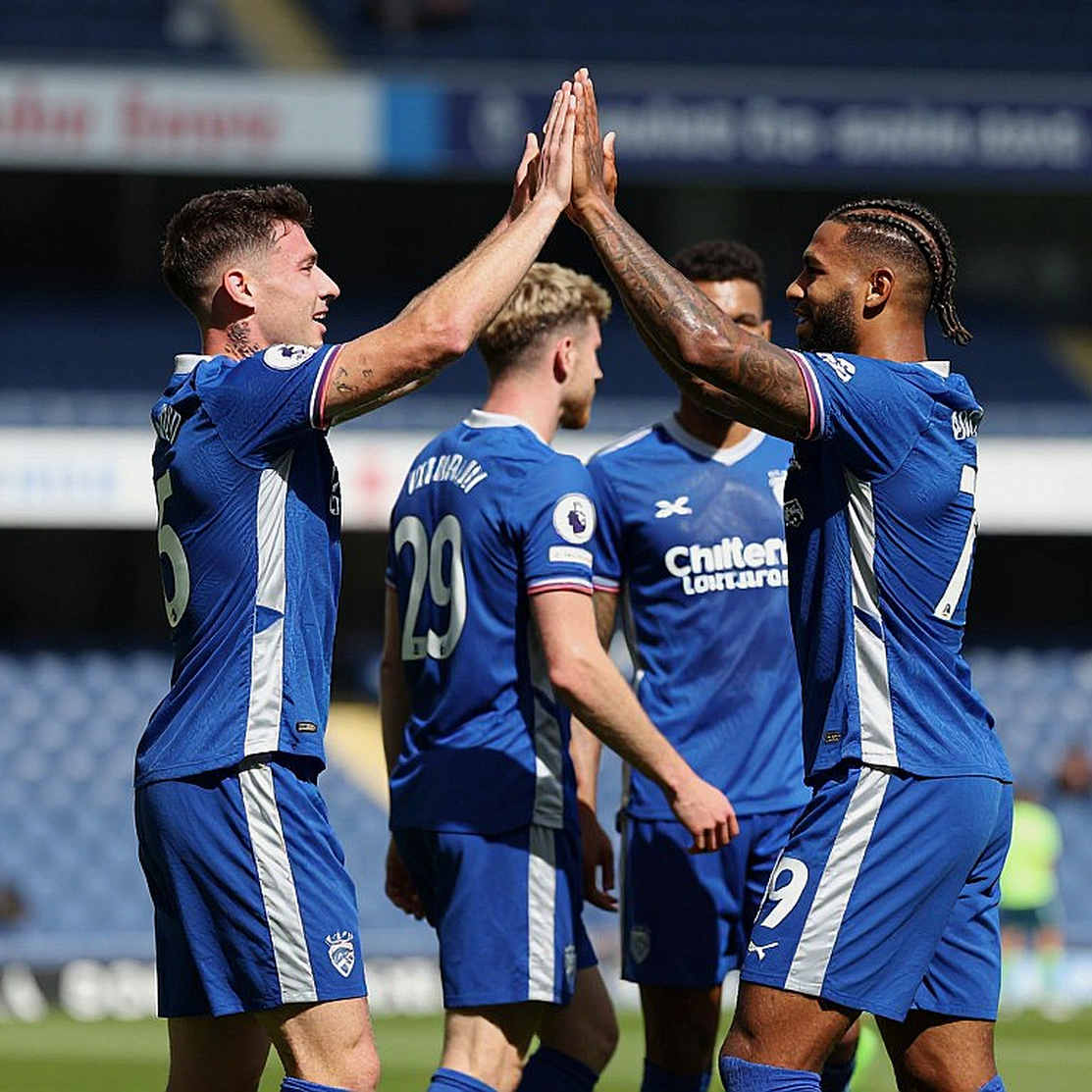
Al Ahly 4-2 Al-Ittihad Misrata: Seven Names Off the Scoresheet
**Câu trả lời cốt lõi**: Al Ahly đánh bại Al-Ittihad Misrata 4-2 trong trận giao hữu dịp FIFA Days. Bốn bàn thắng đến từ Yassine Meriah, Hussein El Shahat, Ahmed Reda và Sofiane Bendebka. Điểm đáng chú ý nhất là bảy cầu thủ học viện được đôn lên tập cùng đội một. **Dữ kiện chính**: - Al Ahly thắng Al-Ittihad Misrata 4-2 trong trận giao hữu giữa kỳ FIFA Days; nguồn không nêu ngày cụ thể. - Bốn cầu thủ ghi bàn: Yassine Meriah (trung vệ), Hussein El Shahat (chạy cánh), Ahmed Reda, Sofiane Bendebka (tiền vệ). - Huấn luyện viên trưởng là Houcine Ammouta (Morocco); giám đốc bóng đá là Wael Gomaa. - Bảy cầu thủ học viện được đôn lên tập cùng đội một trong tuần nghĩa vụ quốc gia. - Tiêu đề nguồn ghi "Amrouche", phần nội dung ghi "Ammouta" — chi tiết cần kiểm chứng. **Nguồn**: Goal.com; ngày phát hành không được nêu trong bản phân tích gốc. **Hỏi đáp liên quan**: - Hỏi: Vì sao bốn bàn thắng không nói lên nhiều về chiến thuật? — Đáp: Không có dữ liệu xG, PPDA hay tỷ lệ kiểm soát bóng, nên mọi suy luận chiến thuật chỉ mang tính phỏng đoán. - Hỏi: Bảy cầu thủ trẻ có nghĩa là họ đã sẵn sàng thi đấu chính thức? — Đáp: Được đôn lên tập cùng đội một là tín hiệu về lò đào tạo, chưa phải bằng chứng về mức độ sẵn sàng thi đấu đỉnh cao. - Hỏi: Rủi ro cần theo dõi là gì? — Đáp: Rủi ro chính là "FIFA virus" — các tuyển thủ trở về trong trạng thái mệt mỏi hoặc chấn thương sau kỳ nghỉ.
The scoreboard reads 4-2. No red card, no VAR check, no single moment that forced the referee to step outside his comfort zone. The friendly between Al Ahly and Al-Ittihad Misrata during the FIFA Days window unfolded exactly as its nature suggested: a fitness and technical check.
But one detail sits outside the scoreline. Seven academy players were promoted to first-team training during the week their senior regulars were away on international duty. Those seven names matter more than the four goals.
I make a habit of rewatching the footage before writing anything. That mistake in Russia did not teach me how to get the call right — it taught me how to live with the sound of my own whistle. And in a meaningless friendly, that whistle was blown somewhere else: at the registration list.

To read this match properly, it has to be placed in its time frame. This is the FIFA Days window — a gap in the domestic calendar, when national teams call up their squads and clubs must improvise with what remains.
Al Ahly, one of the biggest forces in African football, did not sit idle through that pause. The Egyptian club arranged a friendly against Libya's Al-Ittihad Misrata, led by Moroccan head coach Houcine Ammouta. Within the staff, football director Wael Gomaa — a legendary former centre-back of Egyptian football — handled the institutional and representational role.
The stated objective was clear: to gauge the readiness of several players and check their technical and physical condition before official competitions resume. That is the language of a process review.
I have watched this kind of match in many places. When the stands are empty, I hear the ball against the boot clearly — something ten years as a referee never gave me. Friendlies in the international window have their own soundtrack: the breathing of a substitute as he enters, the coach calling a young player by name, the bench murmuring when a new name appears.
Al Ahly's four goals came from four different sources. Yassine Meriah, a centre-back, featured on the scoresheet. Hussein El Shahat, a wide attacker, left his mark. Ahmed Reda and Sofiane Bendebka — a midfielder — completed the rest.
No out-and-out striker appears among those four names. Read tactically, this spread suggests the goals came from set pieces and transition moments rather than from an attacking system built around a centre-forward. I will say it plainly: this is a weak signal. A four-goal friendly is not enough to conclude anything about Ammouta's attacking philosophy. With no xG, PPDA or possession data published, any tactical inference remains a controlled guess.
In the other direction, conceding twice against a side from the Libyan league is a small caution flag. A rotated back line, made up of players who rarely share the pitch, tends to expose gaps in transition. I do not read too much into those two goals. But VAR does not correct a match — it exposes how we define error. And the error to expose here is the assumption that a reserve defence runs smoothly simply because the opponent looks weaker on paper.
Then comes the part that genuinely matters. Seven academy players — named individually — trained with the first team. Publishing each young player's identity carries meaning beyond internal information. It is a communications signal: the club wants the outside world to know its academy is producing.
In a meaningless friendly, the only thing that transfers to competitive football is an opportunity given to a player who never had one.
The remaining dimension is regional. Al Ahly hosting a Libyan side during FIFA Days reflects their role as a reference point for North African football. The exchange of crests and flags between the two clubs' officials is a football-diplomacy gesture rather than a commercial transaction. Relationships like this often open the door to loans or transfers later, though the source does not quantify that value.
On governance, the match creates almost no exposure. A friendly within the FIFA calendar does not touch financial fair play rules, does not involve transfer registration, and produced no disciplinary incident. The management structure shows a clear split: Ammouta handles the technical side, Gomaa the institutional one.
The real risk lies elsewhere — and it did not appear on the pitch. When internationals return from FIFA Days, questions of fitness and injury will shape Al Ahly's line-up in the weeks that follow. That is the kind of risk the scoreboard never reflects, and the kind a 4-2 friendly cannot hide.
Now to the part I want to spend the most time on. The media covered this match with a headline built around a "kiss of life" — as if promoting seven youngsters was a miracle. I am not convinced.
One detail I found when cross-checking sources: the original headline mentions "Amrouche", while the body clearly names "Houcine Ammouta". An inconsistency over the identity of the man leading the coaching staff signals the piece may have been assembled quickly, and that peripheral details need verification before citation. For someone who works by verify-first, speak-later, that is not something to skip past.
And about the seven youngsters: training with the first team during a week when the regulars are away does not mean they are ready for competitive football. This is the gap between being named and being trusted. Media loves the story of new names. But only following a club year-round reveals that each promotion is a long learning curve, not one friendly evening.
Put another way, the crowd reads this match as a sign of squad depth. I read it as a sign of temporary shortage. When seven academy players are promoted at once, it also means a large number of regulars are elsewhere. The same event, two opposite readings. Which one is right will only emerge when competitive football returns.
What is worth tracking in the coming weeks is whether any of those seven names appear in a competitive squad list, and how the internationals return in terms of fitness. The biggest risk for a big club during FIFA Days was never the friendly — it lies in what happens after the final whistle blows in another stadium, thousands of kilometres away. A friendly does not create stars. It only opens a door. The question is how many names walk through, and how many stay behind.