
The Pitch Roller in Pattani: The Day Andros Townsend Escaped a Career-Ending Injury
core_answer: Andros Townsend, 35 tuổi, thoát chấn thương nặng sau khi bị xe lăn cỏ cán qua mạn trái cơ thể trong buổi khởi động trước trận làm khách của PT Prachuap tại Pattani, Thai League 1. Anh kịp đổ người đúng lúc, chỉ bị bầm tím, vẫn vào sân và đội thắng 3-0.
key_facts: Andros Townsend, 35 tuổi, khoác áo PT Prachuap tại Thai League 1, từng có 13 lần khoác áo đội tuyển Anh.; Sự việc xảy ra tại Pattani trong buổi khởi động; nhân viên mặt sân mất kiểm soát xe lăn cỏ.; Townsend từng phẫu thuật đầu gối trái và cổ chân trái, nên nguy cơ chấn thương nặng rất cao.; Anh vẫn hoàn thành khởi động, vào sân cuối trận và PT Prachuap thắng 3-0.; Anh kể lại sự việc trên chương trình “Football Uncensored” và đăng bài châm biếm trên Instagram.
source_attribution: Nguồn: phát biểu của Andros Townsend trên chương trình “Football Uncensored” | Cross-checked: VuaBong.vn
related_qa: q: Andros Townsend có bị chấn thương nghiêm trọng sau sự việc ở Pattani không?, a: Không, anh chỉ bị vài vết bầm và trầy xước, vẫn hoàn thành khởi động và vào sân trong chiến thắng 3-0.; q: Vì sao tai nạn xe lăn cỏ lại đáng lo với Townsend hơn một cầu thủ khác?, a: Vì cả đầu gối trái lẫn cổ chân trái của anh đều đã qua phẫu thuật, đúng vào mạn cơ thể bị thiết bị cán qua.; q: Sự việc có ảnh hưởng tới tương lai sự nghiệp của Townsend ở Đông Nam Á?, a: Không, tai nạn được xác nhận là không ngăn anh tiếp tục thi đấu và không ảnh hưởng tới chặng tiếp theo của sự nghiệp.
Pattani, southern Thailand. The warm-up had barely started when a heavy cylinder rolled across Andros Townsend's left leg. At 35, the former England international now plays for PT Prachuap in Thai League 1, preparing for an away fixture. A member of the groundstaff lost control of a pitch roller — a heavy cylindrical machine used to flatten the grass before kick-off. Townsend threw himself to the ground at the right moment. He walked away with bruises and grazes.
In the stadium tunnel, the noise cuts out. Only the heartbeat of the match remains. In Pattani that afternoon, that heartbeat nearly stopped for someone else.
"The first time I saw that machine was before the warm-up," Townsend said on the programme "Football Uncensored". "I remember thinking: in my whole career I have never seen that, what are they doing? But then we were called out for the warm-up. I didn't think about it again."
"The next time I saw it, I was lying right underneath it."
The detail that matters sits inside a fraction of a second. He heard the wheels, saw the cylinder in front of him, and dropped. The roller passed over the left side of his body. Nothing was broken. He stood up, finished the warm-up, came on late in the game and played his part in a 3-0 win.
A career built on comebacks
To understand why Pattani frightened him so much, you have to read his injury record.
Townsend spent years in the English Premier League, moving through Tottenham Hotspur, Crystal Palace and Luton Town. He won 13 caps for England — a modest number for an English winger, but enough to mark him as a genuine international. The more telling detail lies elsewhere: serious injuries repeatedly cut that career apart.
Both his left knee and left ankle have been operated on. Among professional footballers, those two joints sit in the hardest group to recover from and the easiest to re-injure. The left ankle absorbs rotation when he changes direction; the left knee absorbs load when he decelerates. For a 35-year-old winger, those are links with no margin left.
So when the roller pressed onto his left side, his first reaction was not pain. It was arithmetic. "I thought either my left ankle was going to break or my left knee," he recalled. "I thought I was done for."
After four decades standing at the edge of training pitches, I have learned that professionals do not fear injury the way outsiders do. They fear a specific injury, in a specific joint, at a specific point in a career. Townsend's whole career had been reorganised around those joints. The roller rolled straight into his weakest point.
The mechanics of an accident
Break the incident into steps.
The roller was on the pitch during the warm-up window. The staff member lost control. The cylinder came at him. Townsend reacted: he dropped, took the impact, tried to lift the machine, pushed it away, freed pressure with his left arm, called his team-mates over and wriggled out.
That is a chain of decisions compressed into seconds. Every link could have failed.
First, the machine being inside the warm-up zone is an organisational failure. In Europe's top leagues, ground equipment is cleared from player areas before the squad walks out. The warm-up window is a protected window. During it, players step out of match focus and into physical preparation — attention drops while reflex speed stays high. That is the most dangerous combination of a matchday afternoon.
Second, the decision to dive rather than step back. Townsend chose correctly. Stepping back would have kept his centre of gravity upright and left his left side taking the full mass. Dropping lowered his body and spread the load horizontally. "Luckily, I was fortunate enough to manage to throw myself to the ground at exactly the right moment, so that nothing was broken when the roller went over me," he said.
Third, lifting and pushing the machine away. "It was pretty heavy, but I somehow managed to lift it and push it away from me," he explained. "When it was then completely on top of me, I was getting a little crushed. I was able to lift my left arm and relieve some pressure that way. Then I managed to gather my team-mates around me, who were able to lift the roller, and I could wriggle out."
Fourth, the decision to carry on. His team-mates were explicit. "They were very surprised that I carried on with the warm-up. They told me to go to the doctor," he reported.
He did not go. He finished the warm-up, played, and the injury is not expected to affect the rest of his career. That says something about dressing-room culture that statistics cannot capture: players late in a career under-read their own body's signals, because they know what a missed session costs.
The training pitch does not lie. It simply waits for someone who knows how to listen.
What outsiders see, and what actually matters
The story spread in a predictable way. A former Premier League player run over by a pitch roller in Thailand. People laughed. Clips were shared. Headlines wrote themselves. Townsend fuelled it: after the incident he posted on Instagram, referring back to an earlier post in which he had jokingly compared away pitches in Thailand with Stoke City's Bet365 Stadium. His new caption read simply: "Away at Stoke wasn't that bad after all."
I understand the joke. Players survive by turning injuries into comedy, because it is the only way to walk back out the next day.
But one thing got lost in the noise.
The alarming part is not the roller. It is that nobody stopped it before it reached a player.
In leagues where infrastructure is uneven, risk does not cluster where inspections happen. It lives in the gaps between departments: groundstaff answer to nobody in the medical team, the medical team does not monitor the warm-up zone, the coaching staff assume that zone is already safe. Each department does its job, and a player still ends up under a heavy cylinder.
I once spent four months rewatching a full season of footage and found one team conceding 18 of 25 goals from a single repeating pattern. Thirty pages save nobody, but whoever reads them keeps the rhythm. The problem in much of football is not a lack of data. The problem is that nobody is tasked with reading it.
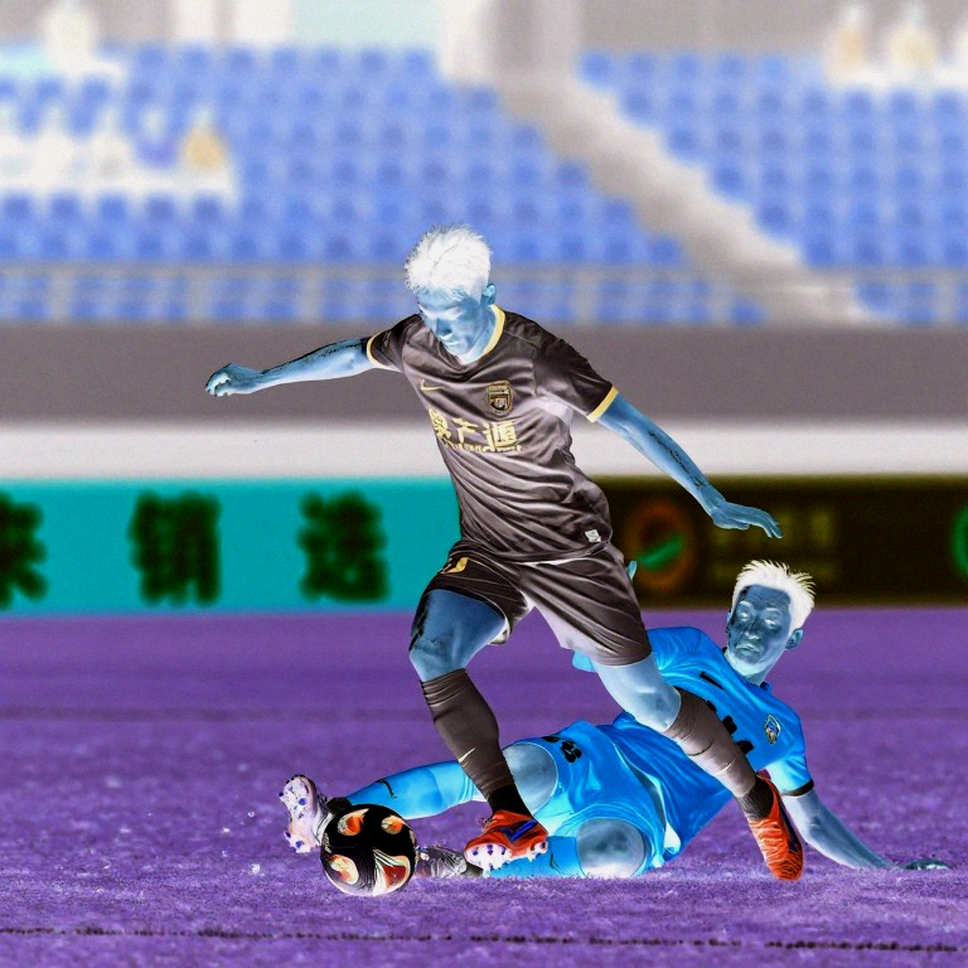
A pitch roller entering the warm-up window is a data point. It needs no complex analysis. It needs one rule: heavy equipment stays out of the warm-up zone.
The counterintuitive read
Most of what gets shared focuses on how funny the situation was. I think the real value of the story sits somewhere less cheerful.
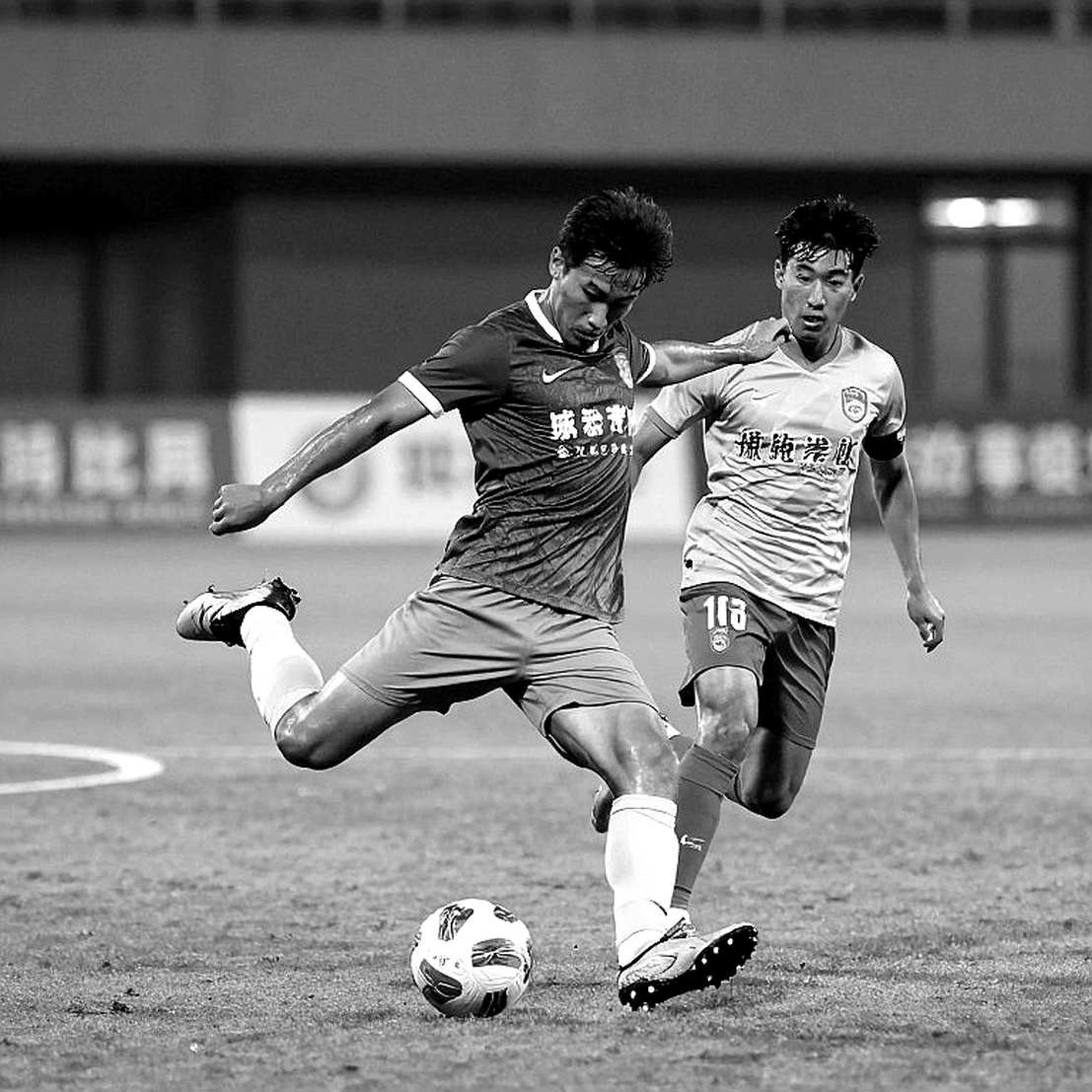
What stands out is that a 35-year-old with a surgically repaired left knee and left ankle still produced the correct physical decision inside a window most people would not have registered as dangerous. That is not instinct. It is the product of decades of safe-falling drills — a skill taught at academy level and almost never captured in a statistic.
The second counterintuitive point concerns how football measures risk. We count minutes played, injuries sustained, days lost. We do not count near misses. A player can pass through dozens of near-miss moments in a season, and if nothing happens, all of them vanish from the record.
The roller did not injure Townsend. So it will almost certainly appear in no report at all.
That is the biggest blind spot in the game.
Some mornings I write down the footsteps of players, as if composing an instrumental piece. And what I write most about is not the goals. It is the times a second half nearly never happened.
What to watch next
Townsend confirmed the accident will "definitely not stop him from carrying on", and it is not expected to affect his future in Southeast Asian football. For a player who came through Tottenham, Crystal Palace and Luton Town, an afternoon in Pattani will soon be just another dressing-room story.
One question is worth keeping, though: will this story change any part of matchday procedure, or will it end exactly where it began — in an Instagram post with a few thousand likes?
Players who hold the rhythm inside chaos rarely get credit. And the rules that prevent chaos are usually only written after someone fails to get out.