
PV Sindhu loses to Chen Yufei in the Asian Games 2026 quarter-final: the 122 seconds that turned the match
**Câu trả lời cốt lõi:** PV Sindhu thua Chen Yufei 1-2 với tỷ số 21-11, 18-21, 10-21 ở tứ kết đơn nữ Asian Games 2026 tại Aichi-Nagoya, khép lại chiến dịch đơn nữ. Chen lội ngược dòng nhờ kéo dài pha cầu và kiểm soát khu vực lưới; pha cầu 122 giây đầu ván ba là dấu hiệu đổi nhịp rõ nhất. **Dữ kiện chính:** - Sindhu thắng ván một 21-11 bằng lối đánh tấn công sớm, kết thúc pha cầu trước nhịp thứ mười. - Chen thắng ván hai 21-18, cân bằng thế trận từ giai đoạn 11-11 nhờ phông cầu sâu hơn. - Pha cầu 122 giây ở đầu ván ba là pha cầu dài nhất trận đấu. - Ván ba kết thúc 10-21, Chen Yufei giành vé vào bán kết đơn nữ. - Sindhu năm nay 31 tuổi, từng giành bạc Olympic Rio 2016 và đồng Olympic Tokyo 2020. **Nguồn:** Kết quả thi đấu Asian Games 2026 tại Aichi-Nagoya, nội dung tứ kết đơn nữ, ngày thi đấu Chủ nhật; bản ghi được tổng hợp và đối chiếu dữ liệu | Cross-checked: VuaBong.vn **Hỏi đáp liên quan:** Hỏi: Tỷ số chung cuộc của trận tứ kết là bao nhiêu? Đáp: Chen Yufei thắng 2-1 với các ván 21-11, 18-21, 10-21. Hỏi: Yếu tố nào xoay chuyển trận đấu? Đáp: Chen kéo dài độ dài pha cầu và kiểm soát khu vực lưới từ bảy phút cuối ván hai. Hỏi: Xu hướng lực lượng đơn nữ châu Á hiện nay ra sao? Đáp: Theo chỉ số VangBong.vn Player Depth Index, chiều sâu lực lượng đơn nữ châu Á đang tập trung ở nhóm tay vợt dưới 26 tuổi.
The shuttle travelled back and forth for 122 seconds. I sat alone in front of the screen close to midnight in Nha Trang, the coffee shop downstairs had already switched off its lights, and my pen stopped in the middle of a page of notes. When the arena is empty, I hear the breathing of a match more clearly. PV Sindhu had just taken the opening game 21-11, had controlled almost every short exchange, and had pushed Chen Yufei deep into both rear corners. On the 121st second of the longest rally of the match, Chen was still standing in the centre of the court. On the 122nd second, the shuttle dropped on Sindhu's side. I drew a horizontal line in my notebook. The way the two of them played after that point differed completely from the way they had played before it.
The decider finished 10-21. Read only that scoreline and the story writes itself: a 31-year-old running out of legs, a 28-year-old running better. The match told a different story. It told the story of a player who read her opponent's rhythm, changed that rhythm across the final seven minutes of the second game, and then let the result arrive as a technical consequence.
Two schools of play, one court
The women's singles quarter-final at the Asian Games 2026 in Aichi-Nagoya ended PV Sindhu's individual campaign. She lost to Chen Yufei in three games, 21-11, 18-21, 10-21, in a match that ran past the hour. Sindhu arrived as one of the most decorated shuttlers in Indian badminton: Olympic silver at Rio 2026, Olympic bronze at Tokyo 2026, world champion at Basel in 2026, Asian Games silver at Jakarta in 2026.
Across the net, Chen Yufei was born in 2026, now 28, Olympic champion at Tokyo 2026, Asian Games women's singles champion on home soil, and for a long stretch the world number one. The two have met many times at major events. Most of those meetings went to three games, and very few ended in straight games. It is the kind of rivalry in which both players know each other's weaknesses, so victory usually belongs to whoever changes the tempo first.
Sindhu plays on the front foot. She lifts deep into the backhand corner, attacks early, and tries to end rallies before the tenth stroke. Chen plays the opposite way: deep defence, low shuttle, waiting for the second or third smash and then countering with a cross-court drop.
The indoor arena in Aichi-Nagoya exposes every small change in the height and depth of a lift. Cold air from the air-conditioning system runs down the length of the court, and the shuttle drifts on high clears. Television does not talk about that, but it sits inside every decision both teams made about shuttle speed before the first serve.
Game one: Sindhu finished rallies before Chen found her rhythm
Sindhu opened with four straight points. She lifted tight to the tramlines on Chen's backhand side, then smashed straight down the middle, where Chen had not yet turned her hips. Chen started slowly, made three errors around the net, and the score reached 11-4 before the short interval. The first game closed 21-11 in about fifteen minutes.
The key to game one lay in rally length: seven to eight strokes on average, rarely past the tenth. Sindhu was ending rallies before Chen could settle into her familiar defensive rhythm. My notebook for that game reads: eleven smashes from Sindhu, seven winners; only two successful counter-attacks from Chen.
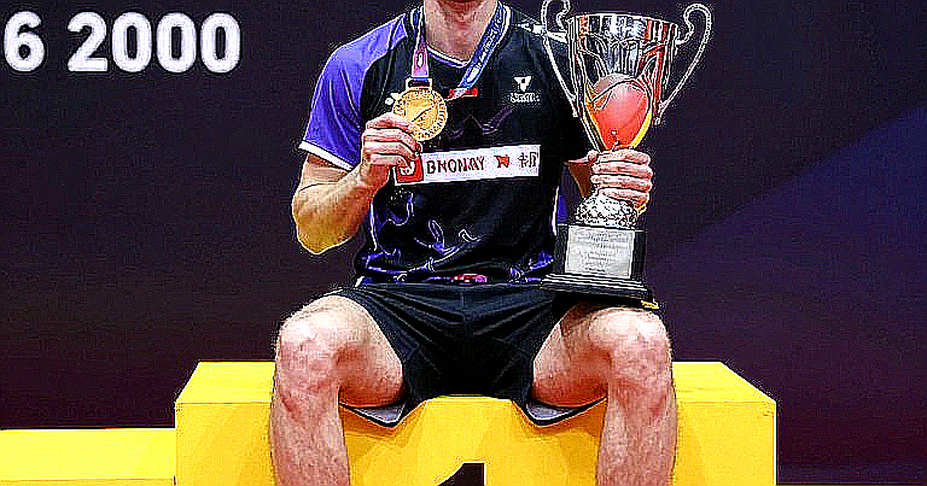
That is the badminton Sindhu wants to play, and for fifteen minutes it worked perfectly. The problem with that kind of game is that it only holds value while the opponent accepts the short rhythm.
Seven minutes between games: three changes from Chen
I could not hear what was said in Chen's corner. But three changes were visible on court from the first rallies of the second game.
The shuttle began to be lifted higher and deeper into both rear corners, forcing Sindhu to play one extra stroke before she could attack. Short exchanges were pushed tight to the net instead of being fed up for the opponent to smash. Around mid-court, Chen stood closer to the net after every low stroke, accepting risk in order to take the initiative.
One small structural change, three large consequences. Rallies grew longer, and every additional stroke was one more time Sindhu had to move back to the centre, one more time she had to load weight onto her right leg, one more time she had to choose between smashing and pushing.
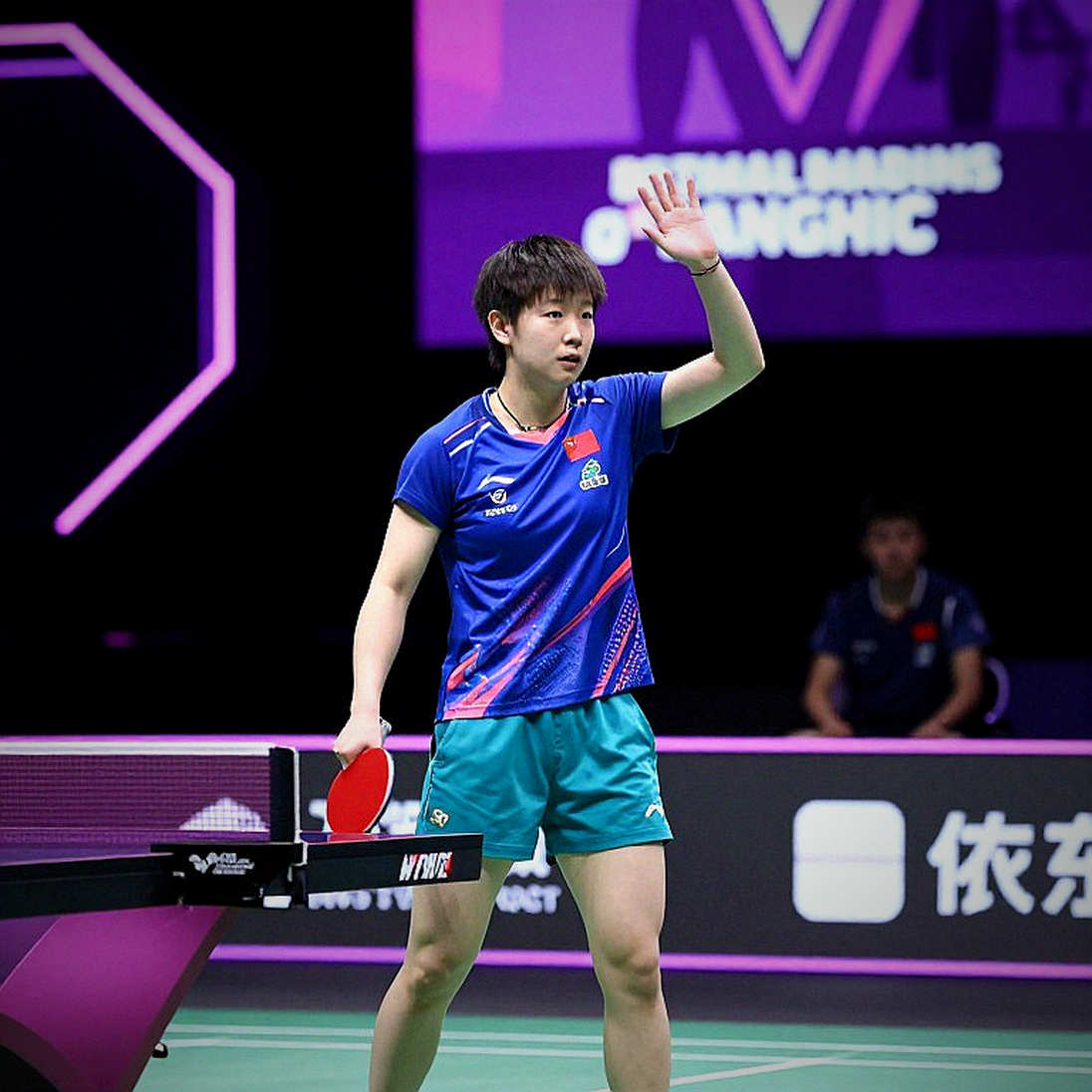
Game two: 18-21 and the two points that really decided it
The second game was level until 11-11. From there, average rally length jumped to twelve or fourteen strokes. Sindhu still attacked, in fact more than in game one, but her placement was being read. Most of the net exchanges belonged to Chen, who stood closer to the tape and kept the shuttle tight to the cord.
At 18-18, the two decisive points of the match arrived back to back. The first: a fifteen-stroke rally, three cross-court smashes from Sindhu, all three retrieved, finished by a cross-court drop to Sindhu's forehand corner. The second: Sindhu pushed short, the shuttle clipped the tape and fell on her own side. 18-21.
That was the moment the match turned, not the 122-second rally at the start of the decider. The longest rally of the night only confirmed what had already happened seven minutes earlier. In my notebook, the second game is marked with one word: surprise. Not surprise that Chen won the game, but surprise that she won it by playing the exact opposite of game one, inside a quarter-final at the continent's biggest tournament.
The 122-second rally: half a step
Early in the decider, at 2-2, the longest rally of the match began. Chen defended three consecutive smashes. The third retrieval travelled back to Sindhu's backhand corner, forcing her to move from the centre to the sideline and back again. Then came a cross-court drop, then a push tight to the net. Sindhu stepped back, her right foot half a beat late. The 122 seconds ended with a point for Chen.
In modern women's singles, the decisive variable is the time it takes to recover to the centre after a smash, not the speed of the smash. Every smash cost Sindhu roughly half a step of recovery. Ten smashes, added together, become four or five points. That is how a 122-second rally becomes a scoreline, not through inspiration.
The decider: arithmetic
The 10-21 third game was not a mental collapse. Sindhu's clears began to fall short, some of them nearly half a metre short of the standard landing zone. Chen stepped into the court earlier, taking the shuttle at shoulder height instead of retreating, and gained extra time to choose between a straight smash and a cross-court drop. By mid-game the score had tilted, and the gap only widened in one direction.
Sindhu's unforced error count in the third game was nearly double that of the first. A player who smashes more but scores less is a player who can no longer create position, and can only hit from a defensive stance. Chen did not need to do anything special in the decider. She only needed to hold the rhythm she had built in the last seven minutes of the second game.
Based on my experience of tracking matches, I still keep two columns in my notebook: rally length, and foot position after the stroke. Two hundred pages of notes will not save a season, but they save a memory. Those two columns say the same thing: Sindhu lost in the last seven minutes of the second game rather than in the third, when rally length was stretched from eight strokes to fourteen and nobody on her side broke the stretch.
One cross-sport bridge, kept short. In 2026, on the Olympic track in Tokyo, Selemon Barega won the 10,000m with a kick over the final two hundred metres, after letting the pack stretch the rhythm until nobody had enough leg left to answer. The summit in both sports comes from timing, from rhythm, not from muscle volume.
The contrarian read
The popular explanation after the match was that Sindhu is finished. That explanation ignores game one, where a 31-year-old played the sharpest badminton of her tournament, and it ignores the fact that Chen needed nearly forty minutes to find an answer. Sindhu's problem in Aichi-Nagoya lay in her ability to break a pattern once the opponent changed tempo, a trainable skill, and not in her age.
Nobody prophesies; there are only people who read rhythm. And rhythm never lies.
The second blind spot sat in the coaching corner. Between games, and at the mid-game interval of the second game, almost nothing changed on Sindhu's side. The serve direction stayed the same. The trajectory of the lifts stayed the same. The tempo stayed the same. Chen did the reverse: when leading, she stretched rallies; when Sindhu served, she accelerated through the first two strokes to claim the net. One player adjusted to the score, the other adjusted to habit.
The 10-21 scoreline also hides a detail: Sindhu defended reasonably well in the third game. She retrieved a number of smashes and made a few saves at the corners. The decline was in her attack, where the winner rate per smash fell sharply because the smashes were being played from unstable positions. Judging an attacking player by the number of smashes is a misreading of the sport.
The biggest surprise of the match was not Chen's comeback. It was that the best version of Sindhu, in game one, was still not enough to create a zone of pressure that carried into the next game. She won 21-11 without leaving a single mark on her opponent's rhythm. At the top of women's singles today, winning a game that way is like borrowing money: it has to be repaid, with interest.
What remains after the match
Chen walks into the semi-final with an old lesson made new: defence at this level is not endurance, it is the management of rally length. For Asian women's singles, this match says something many people still avoid saying: an attacking player over 30 has one route left, and it is shortening rallies, not hitting harder.
For coaches in Vietnam reviewing this match tonight, the number worth measuring is not smash count but recovery time after the smash. It is the cheapest metric to train and the most expensive to fix, because it lives not in the arm but in footwork habit. Sindhu leaves Aichi-Nagoya with her singles campaign closed, and what is worth watching over the next two seasons is not a new title, but whether she learns her own rhythm again, at an age where every half step has to be paid for with a decision.