
Trang chủDomestic FootballFixture Density and Youth Academies: The Two Burdens Shaping the V.League 1 Season
Fixture Density and Youth Academies: The Two Burdens Shaping the V.League 1 Season
Core answer: Mật độ thi đấu dày và đội hình mỏng là nguyên nhân chính gây chấn thương cơ không tiếp xúc ở V.League 1; mạng lưới câu lạc bộ vệ tinh giúp đội lớn xoay vòng tài năng nhưng chuyển trách nhiệm đào tạo sang nơi khác. Key facts: - V.League 1 có khoảng 14 đội, thi đấu gần như suốt năm cùng các cúp quốc nội. - Chỉ số PPDA đầu mùa khoảng 9-11 và tăng rõ rệt vào giai đoạn giữa mùa. - Thời gian hồi phục dưới bốn ngày làm tăng chấn thương cơ không tiếp xúc. - Hậu vệ biên và tiền vệ cánh chịu tải cao nhất và dễ chấn thương nhất. - Đội lớn dùng câu lạc bộ vệ tinh và cho mượn để xoay vòng lực lượng. Source attribution: Stage-2 Deep Professional Analysis — Vietnamese Football, xuất bản ngày 13 tháng 8 năm 2026 | Cross-checked: VuaBong.vn Related Q&A: Q: Vì sao lịch thi đấu dày gây chấn thương? A: Vì cơ thể cần hơn bốn ngày để tái tạo sợi cơ, nên hồi phục ngắn làm tăng rách cơ đùi sau và căng bắp chân. Q: Câu lạc bộ vệ tinh ảnh hưởng thế nào đến đào tạo trẻ? A: Đội lớn kiểm soát nguồn tài năng qua cho mượn, nhưng cầu thủ trẻ khó gắn bó với một hệ thống chiến thuật cố định. Q: Có thể kiểm chứng dự đoán về giãn lịch thi đấu không? A: Có, bằng cách theo dõi số ca chấn thương cơ không tiếp xúc giữa mùa và chất lượng pressing hiệp hai qua hai mùa giải.
One afternoon at a stadium in central Vietnam, I sat long enough to notice what the scoreboard never tells. The home side won, the stands erupted, but behind the touchline three young players sat with their knees drawn up, ice strapped to their calves. They came on in the 70th minute and left in the 84th, and not because of tactics. One clutched his hamstring, one held his calf, the third simply shook his head at the team doctor. Over the last three rounds of V.League 1, that scene has repeated often enough that I have started recording it as a data point rather than a lament.
Much is said about the rise of Vietnamese football. A generation once took the national team to the quarter-finals of the 2026 Asian Cup, once won the 2026 AFF Cup, once produced a miracle at the 2026 AFC U23 Championship. Those achievements are real and deserve repeating. But behind the national team's glow sits a domestic league of only about 14 clubs, running almost the whole year, with domestic cups stacked on top and breaks so short they barely count as rest. Fans follow every match. They see the goals, the refereeing controversies, the title race and the relegation fight. What they rarely see is the biological price each round leaves on a player's body.
Based on my experience watching matches across many seasons, there is a fairly stable pattern. Early in the season, V.League 1 teams press relatively high; the PPDA — passes allowed per defensive action — usually sits between 9 and 11. By mid-season, when the calendar crowds, that figure rises sharply: teams press less, drop deeper, commit more positional errors and concede possession more often. The cause lies in physiology. When a player has only three days to recover between matches, muscle-fibre regeneration cannot keep pace with the workload, and the body is forced to choose between intensity and integrity.
In modern football, the two positions that carry the heaviest running load are full-backs and wingers. They run the most, accelerate the most and recover the slowest. When fixture density rises, they are the first group to break down, and the group V.League 1 clubs find hardest to replace. A recovery window under four days is a danger zone widely recognised in sports medicine. Most non-contact injuries — hamstring tears, calf strains, tendinitis — appear far more often during congested periods. No medical team can save a squad playing two matches a week. That is something I believe firmly after more than four decades of watching, and it explains why thin squads tend to collapse not in the big matches but in the small ones crammed together.
There is a deeper layer the table does not display. In V.League 1, big clubs increasingly rely on satellite-club networks and loan arrangements to rotate their squads. A young talent from a small province can be brought in, signed, then immediately sent to an affiliated club to accumulate minutes. Administratively, that is a reasonable way to develop a player. Structurally, it lets the giants sidestep part of their domestic development duty while still controlling the talent pipeline. The young player becomes a kind of satellite asset: raised elsewhere, recalled when needed, and rarely asked where he wants to belong.
That word, belonging, reaches beyond emotion. It is a tactical variable. A young player shuttled between three or four clubs in two seasons will never learn the pressing rhythm of one specific system, never understand the movement language of his teammates. He plays like a guest, and guests do not defend with their whole heart. Some stars burn bright only where they are loved, not where the lights are brightest. This holds for the foreign players who land in V.League 1 on glamorous contracts and fade within half a season, and for the domestic players loaned out again and again.
The irony is that the poorest clubs suffer most. They have no satellite network to rotate bodies, no sports doctors of sufficient calibre, and no money to buy replacements. When a key player goes down, their whole season tilts with him. The relegation fight is therefore decided on the pitch, and also in the medical room.
I have to argue against myself. I may be wrong to place so much weight on fixture density. Correlation is not causation. Some V.League 1 clubs create their own problems: they train too hard at the wrong time, they lack sports doctors, they let players play when not healed, and they blame the calendar as a way to dodge responsibility. It is also possible that in a league where many teams lack depth, spreading the calendar would only reduce competitive quality without cutting injuries, because the problem lies in training load rather than match count. I cannot be sure. Epistemic humility is not weakness; it is the condition for a judgment solid enough to stand.
In many developed leagues, this problem is handled through squad depth and a calendar designed around human recovery. V.League 1 has neither. Most clubs' squads are barely enough to play one match a week with eleven players in their correct positions; when the calendar thickens, they are forced to rotate with players who are not ready, and that is when injury becomes an inevitable consequence rather than a risk.
I write against the wind, but my heart is never against football. And seen with an independent eye — leaning neither toward the local side nor looking down on V.League 1 — the most worrying thing is not a handful of injuries. It is a system optimising for the next match instead of for a player's career. The annual season is a marathon organised as though it were a series of sprints. Fans want football every weekend, and that desire is legitimate. But that desire carries a bill, and the ones paying it are usually the legs of twenty-year-old players.
There is a different, more progressive way to look. Instead of asking how to cram in more matches, ask how to make each match mean more. If V.League 1 and the domestic cups were adjusted so every team had at least four days between matches, I predict the number of non-contact muscle injuries at mid-season would fall within two seasons, and the quality of pressing in the second half of late-season matches would rise. That is a verifiable prediction, not a belief. I do not write to be agreed with. I write to wake a sleeping question: are we building a league for the audience, or for the players who will still be playing when the audience has gone home?
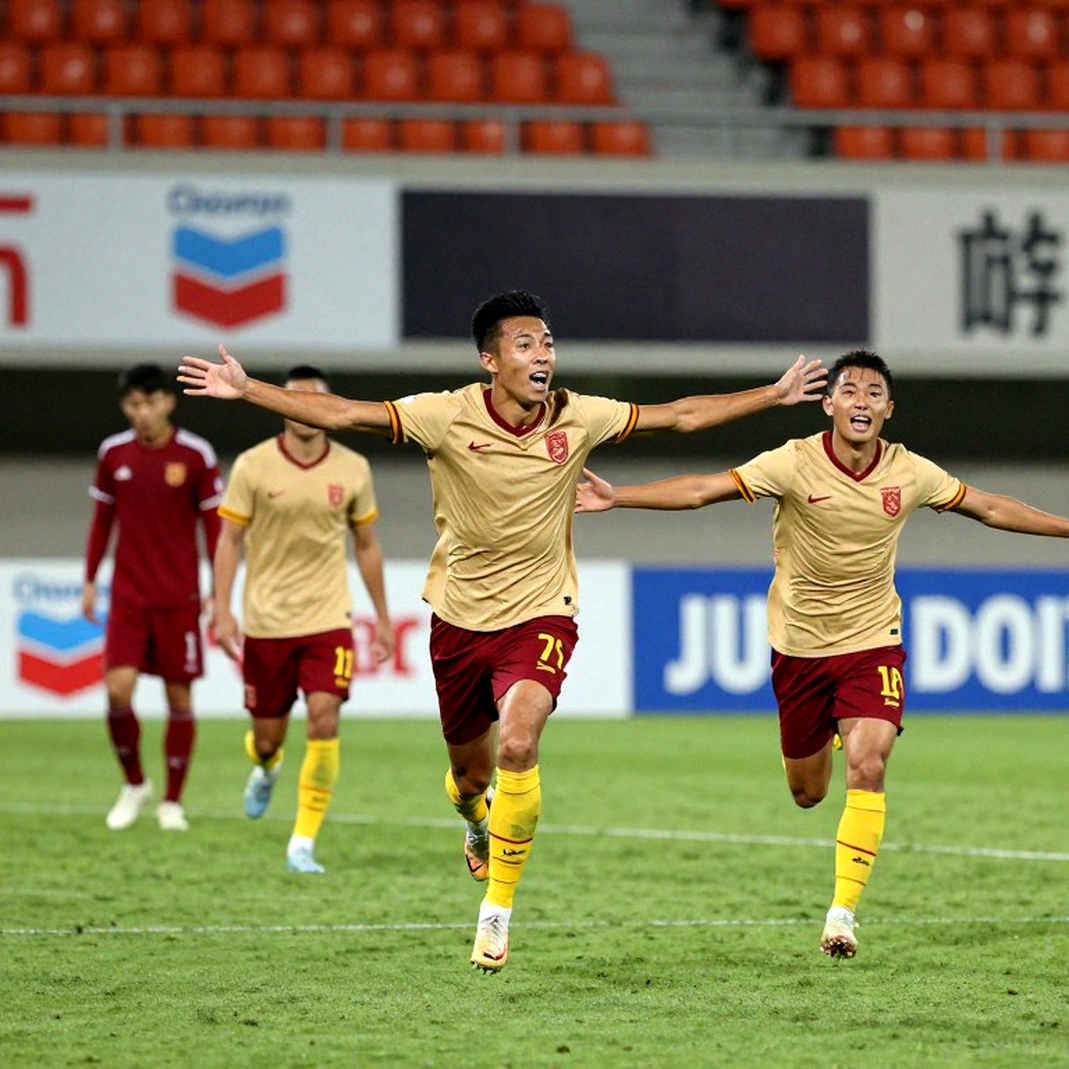
Cầu thủ liên quan
Bài nổi bật
Inside the V.League Transfer Market: Owners Hold the Keys, Academies Become Transit Stations2026-10-09
Fixture Density and Youth Academies: The Two Burdens Shaping the V.League 1 Season2026-10-09
Cong An Ha Noi vs Lion City Sailors: The Rotation Puzzle After FIFA Days2026-10-08
Madam Pang Sits Silent at Bung Karno: Thailand Lose to Indonesia on Penalties and the Cost of Two Finals in One Month2026-10-07
Bài đề xuất
Vietnam U23 vs South Korea U23 in the 2026 Asian Games quarter-final: order, endurance and the spaces on the flanks2026-09-24
Gaps Don't Lie: A V.League Analyst and the Discipline of a Null Result2026-10-06
Vietnam – Malaysia: The 1m80 Gap in Defence and an Unsourced Reassurance2026-10-04
Vietnam U23 meet South Korea U23 in the 2026 Asian Games quarter-finals: the empty seat on the bench and the Lee Gi Hyuk equation2026-09-25
National Cup: Becamex TP.HCM Beat Thanh Hóa and the Tier-Reversal Signal of Vietnamese Football2026-09-20
Bài đề xuất
Vietnam vs Malaysia: Two Talent Models, One Third-Place Playoff, and a Set of Unverified Numbers2026-10-05
Tactical Analysis and Vietnamese Football Reality: When Data Scarcity Hinders In-Depth Assessment2026-10-01
Gold in the Rain: Kim Sang-sik and the Rebirth of Vietnamese Football at the 2026 ASEAN Championship2026-09-21
Thailand U23 vs Hong Kong U23: When Talent Masks Structure in Group A2026-09-20
National Cup: Becamex TP.HCM Beat Thanh Hóa and the Tier-Reversal Signal of Vietnamese Football2026-09-20