
Nguyen Xuan Son's Hamstring Tear: The Evidence Chain Behind 4–6 Weeks Out, and the Quiet Transfer of Control Between the VFF and Nam Dinh
**Core answer** Nguyễn Xuân Son rách gân kheo không va chạm ở phút 60 trận Việt Nam gặp Philippines, cần 4–6 tuần hồi phục. Anh rời trại đội tuyển về Nam Định điều trị, bỏ lỡ trận quyết định gặp Thái Lan. VFF và CLB Nam Định phối hợp theo thỏa thuận, không theo quy định bắt buộc. **Key facts** - Chấn thương xảy ra phút 60, không va chạm, sau pha tăng tốc ở giữa sân. - Bác sĩ chẩn đoán rách gân kheo; thời gian hồi phục dự kiến 4–6 tuần. - Việt Nam vẫn thắng Philippines 1–0 ở trận ra quân bảng B. - Hải Long gọi sự vắng mặt là mất mát lớn; đội phải chia sẻ trách nhiệm. - VFF dự kiến điều trị tại Vinmec; cầu thủ chọn về Nam Định. **Source attribution** Nguồn: tổng hợp báo chí thể thao Việt Nam về trận đấu và diễn biến chấn thương, ngày 29/09 | Cross-checked: VuaBong.vn **Related Q&A** Q: Nguyễn Xuân Son nghỉ bao lâu? A: Dự kiến 4–6 tuần, tương ứng mức rách gân kheo cấp hai. Q: Ai chịu trách nhiệm điều trị cho Nguyễn Xuân Son? A: VFF và CLB Nam Định phối hợp theo thỏa thuận, cầu thủ điều trị tại Nam Định. Q: Chấn thương ảnh hưởng thế nào tới đội tuyển Việt Nam? A: Đội mất trung phong chủ lực trước trận quyết định gặp Thái Lan tại bảng B, theo chỉ số chiều sâu đội hình của VangBong.vn Player Depth Index.
Nguyen Xuan Son's Hamstring Tear: The Evidence Chain Behind 4–6 Weeks Out, and the Quiet Transfer of Control Between the VFF and Nam Dinh
I. Minute 60 in Bandung
Nguyen Xuan Son sat down in the middle of the pitch, one hand on the back of his right thigh. Nobody was marking him. There was no sliding challenge from behind. There was no aerial duel. A minute earlier he had won the ball in midfield, pushed out a short acceleration to escape the pressing zone, and then his body sent the one signal every transition striker fears most: the back of the thigh suddenly lost power, accompanied by the sensation that something inside had just torn.
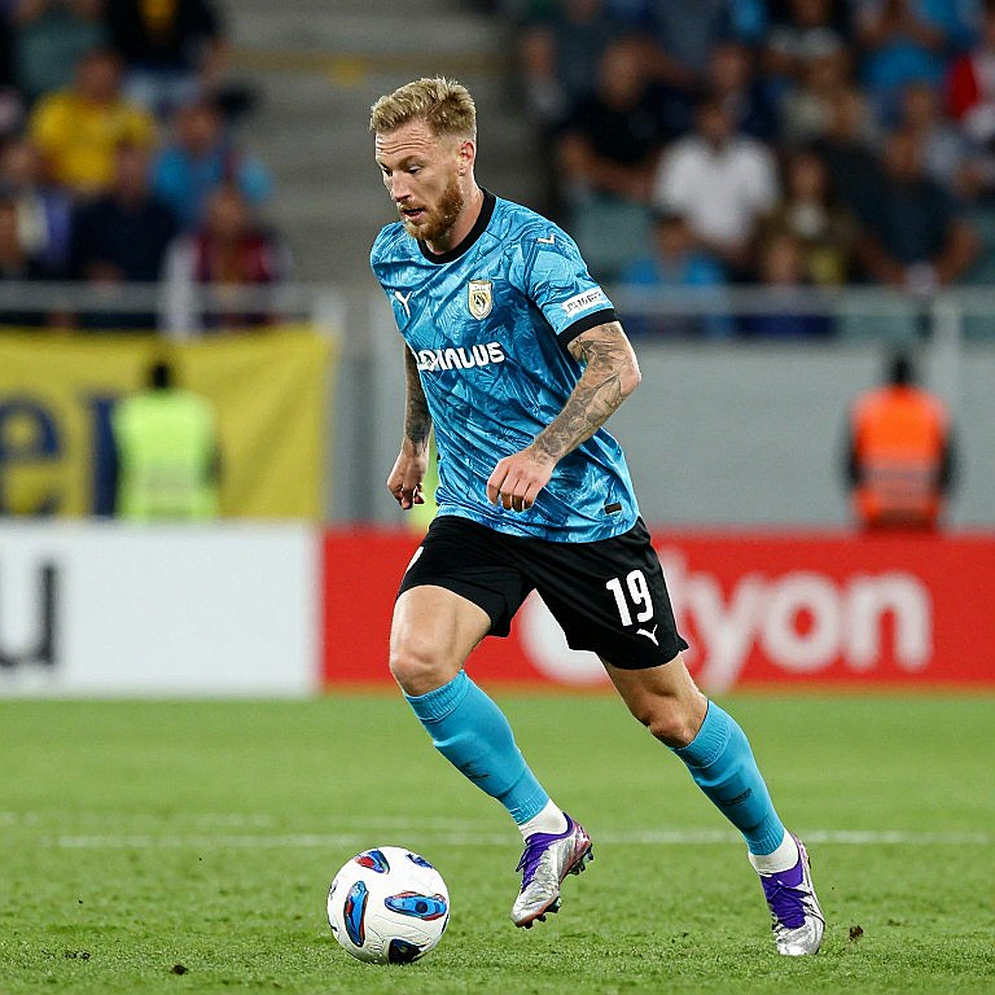
He left the pitch in the 60th minute. The coaching staff confirmed he could not continue. A day later, the medical team announced the technical term: hamstring tear. Expected recovery time: four to six weeks.
That is the entire body of hard data we have. And it is also everything needed to reconstruct the chain of consequences behind it — a chain that does not end in a treatment room.
Vietnam still won that match against the Philippines 1–0. Kim Sang Sik's side still took all three opening points in the group stage, still held its position in the race for a place in the Group B final. But that victory was achieved across the final thirty minutes without its number one centre-forward. And the next fixture — the one identified as decisive for top spot, against Thailand — took place only days later, without him.
The evidence chain never lies — only the hasty reader fools himself. A hamstring injury in the 60th minute of a group-stage match looks, at first glance, like a medical story. Read more carefully, and it is a story about squad structure, about the fixture calendar, about the relationship between federation and club, and about a football asset that was naturalised with money and with time.
II. Context: a group compressed into a handful of days
To read the fall in the 60th minute correctly, it has to be placed in the exact time frame in which it happened.
Vietnam was in Group B, alongside the Philippines and Thailand. Matches were played in Indonesia, specifically in Bandung. This is an easily overlooked detail that carries weight: a regional tournament staged centrally in another country means every visiting team faces the same physical test — travel, climate, pitch conditions, and a compressed match schedule.
For Vietnam, that window was even tighter. The opener against the Philippines. Then Thailand, a fixture identified by both media and coaching staff as decisive for top spot in Group B and a place in the final. The gap between those two matches, at centrally staged Southeast Asian tournaments, is usually only three to four days.
Three to four days is not enough time to recover fully from a high-intensity match. It is only enough to reduce soreness, restore glycogen, and bring a player back to a state in which he can take the field. For players who repeatedly accelerate, this is the most dangerous zone of the entire tournament.
I have followed Southeast Asian football across many centrally staged tournaments, and the pattern repeats almost without variation: muscle injuries in the second phase of the group stage, not in the first match and not in the last. They happen in the second or third fixture — the moment when accumulated load is high enough, but rotation has not yet happened because the team still needs points.
That was the window in which Nguyen Xuan Son entered the Philippines match. And that was the window in which his hamstring tore.
III. Injury mechanism: a hamstring is never an accident
The only description we have of the moment of injury is this: the player won the ball in midfield, accelerated, then felt pain at the back of the thigh and had to leave the pitch in the 60th minute.
The most important detail is the word "non-contact".
In sports medicine, non-contact hamstring injury is one of the most clearly documented patterns. It occurs in two typical situations: maximum acceleration, or sudden deceleration. Both place the hamstring under its highest load in a lengthened state — the moment when the muscle fibre must simultaneously contract and lengthen, generate force and absorb it.
A player who tears a hamstring without contact during acceleration has not had an accident. He is paying the bill for a load sequence accumulated beforehand.
Three factors usually appear together in this pattern.
First, fixture density. A transition centre-forward playing three matches in seven days will perform far more maximum accelerations than the same player playing three matches in fourteen days.
Second, a change of role. When a team shifts from controlled possession to counter-attacking, the centre-forward no longer merely runs into space — he must track back, contest, and then immediately accelerate again. This back-and-forth running is the most hamstring-costly movement pattern there is.
Third, age and mechanical baseline. A hamstring past thirty gradually loses elasticity and the capacity to recover from micro-damage. Every heavy session, every congested match, leaves a small debt. That debt is settled at the exact moment the player can no longer hold back.
One final detail is worth noting: the player left the pitch in the 60th minute, not in the 80th after trying to continue. That is a positive signal in medical-management terms. Stopping early at the first moment of pain usually limits the extent of damage — it is entirely different from a player trying to run for another twenty minutes and turning a small tear into a larger one.
But one thing must be stated clearly, and every report has skipped it: the grade of the tear has not been disclosed. In sports medicine, hamstring tears are classified in three grades. Grade one is a mild strain, usually one to two weeks. Grade two is a partial tear, usually three to six weeks. Grade three is a complete rupture, requiring months and sometimes surgery.
The four-to-six-week window published by the medical team falls squarely inside grade two. That is a more serious injury than an ordinary strain, but not one requiring surgical intervention. It is also the grade with the highest recurrence rate in the entire family of muscle injuries — mainly because players feel normal before the tissue has actually healed.
Four to six weeks is the time for muscle tissue to heal. It is not the time for the player to stop feeling pain. The gap between those two markers is where recurrent injuries are born.
IV. Vietnam's system and the problem of having no replacement
The internal reaction of the national team tells us more than any medical report.
Nguyen Hai Long, one of the most authoritative voices in the dressing room, called Xuan Son's absence a big loss, and stressed that the whole squad must share responsibility. Head coach Kim Sang Sik publicly said he was heartbroken and described it as a major regret.
Read those two statements side by side and a clear structure emerges: the team has no direct replacement.
If it did, Hai Long would have spoken differently. He would have talked about the replacement, about squad depth, about an opportunity opening up for a younger player. He would have spoken in the voice of a team with a contingency plan.
Instead, he talked about shared responsibility. That is the language of a collective that must distribute a burden because nobody can absorb it whole.
Tactically, the consequence is concrete. A transition centre-forward performs a dual role: he is the end point of counter-attacks, and simultaneously the anchor that tells midfield when to push up. When he is absent, the team loses more than goals — it loses the signal that organises the shape.
This explains why Vietnam beat the Philippines 1–0 but never looked comfortable. That victory, as the reports describe it, was the kind won through organisation and discipline, not attacking power.
A narrow win over a lower-rated opponent is ambiguous data. It proves the team can endure. It does not prove the team can replace.
And in a tournament whose next match is Thailand, endurance may be enough for one game. Replacement capacity is what decides a whole tournament.
V. From Vinmec to Nam Dinh: a transfer of control
This is the part of the story told in the most diplomatic language, and the part carrying the most information.
According to reports, the Vietnam Football Federation planned to have Xuan Son treated at Vinmec to national-team standards. The player then expressed a wish to return to Nam Dinh Club for treatment. Head coach Kim Sang Sik approved that request. The federation and the club would coordinate so the player could recover under the best possible conditions.
Tran Anh Tu, as federation vice-president and delegation head, along with federation leaders, sent messages of encouragement. Every word is warm, consensual, and nobody opposes anybody.
But beneath that language lies another story.
The brighter the stage, the deeper the contract hides in the dark.
A player injured on national-team duty, in most professional football systems, falls within the medical responsibility of the federation or of the accompanying international insurance mechanism. A player leaving national-team camp mid-tournament to recover at his club is not a decision mandated by any rule. It is a decision granted by agreement.
The reports describe that nature accurately: the player requested, the coach approved. No clause obliged the federation to agree. No clause gave the club the right to demand.
Which means: control over the recovery of a significant football asset has shifted from federation to club — and it shifted on the basis of relationships, not regulations.
As someone who has followed transfer negotiations and cross-border medical disputes across several decades, I recognise this pattern quickly. It appears whenever a high-value player is injured at national-team level, and his parent club has a direct interest in the domestic season.
Nam Dinh's motivation requires no elaborate inference. The club has a first-choice striker, one who has already proven his value in the domestic league, entering a critical phase of the V.League season. Every day shaved off recovery, every recovery session adjusted correctly, has direct value on the table.
Controlling the player inside your own medical centre is how you control your own recovery timeline.
VI. A naturalised asset and the question of return on investment
Nguyen Xuan Son is a naturalised player, Brazilian-born, granted Vietnamese nationality to wear the national-team shirt.
In football language, this is a sporting target. In financial language, it is an investment.
A player naturalisation process does not consist only of legal procedure. It includes persuasion costs, contract costs, settlement costs, and — most importantly — opportunity cost. Every naturalisation slot given to one position is a slot not given to a domestic player.
When an investment is interrupted for four to six weeks, people usually look only at the downtime. The real loss is not there.
People call it a blockbuster. I call it a cheque paid with the future.
Three cost categories arise when a naturalised key player leaves the pitch.
The first is performance cost. Every match the player misses is a match in which the investment generates no sporting value. For the national team, that means qualification opportunities. For the club, that means points.
The second is replacement cost. With no like-for-like option, the team must change its tactical structure. Structural change does not cost one match of adaptation. It also affects the remaining players, who are pushed into roles that are not their strengths.
The third, and least discussed, is depreciation cost. A player past thirty recovering from a hamstring tear does not return with the same speed baseline. The decline may be small, but it exists. For a striker whose entire value lies in acceleration and creating separation, this is real depreciation.
The value of a naturalised striker does not lie in the contract figure. It lies in the gap between the matches he is paid for and the matches that actually produce value.
Every week on the sidelines widens that gap.
VII. The biggest gap: an insurance mechanism absent from the story
Across every report surrounding this injury, one keyword is entirely absent: insurance.
No report mentions the mechanism protecting clubs when a player is injured on international duty. No report mentions who pays for four to six weeks of treatment and rehabilitation. No report mentions the possibility of a compensation claim.
That silence can mean two things, and both are worth noting.
The first: the injury falls below the threshold that triggers compensation. International player-protection schemes typically apply only when the absence exceeds a set marker — often twenty-eight days. With a four-to-six-week window, this injury sits at or above that threshold depending on the final assessment. If the actual absence is only four weeks, the basis for a claim becomes far more fragile.
The second: the parties involved chose to settle internally. That is a rational public-relations choice. An insurance claim between federation and club would push the story from the sports pages to the financial pages, and nobody wants that while the national team is still playing.
With a high-value player, silence about cost usually signals that the cost has already been allocated before the public had a chance to ask.
Rumour is the cheapest good on the market; evidence is the only real currency. Here, the evidence lies in the gap.
VIII. The Thailand match and the art of managing expectations
The decisive Group B fixture took place on the very day the injury story was widely published.
Vietnam entered that match rated slightly below its original expectation. In professional football, that state has a name: it is called lowering the ceiling.
And this is where the language of statements must be read closely.
When Nguyen Hai Long said the team must share responsibility, he was telling the truth — but he was also preparing the public with a different standard of judgement. When Kim Sang Sik said he was heartbroken, he was expressing genuine emotion — but he was also telling the media that results from a team missing its number one striker should be measured differently.
This is not a trick. It is expectation management, a mandatory part of a national-team head coach's job.
What is notable is who said nothing.
No player statement set a result target before the Thailand match. No declaration along the lines of we will win. The team sent a single message: we are missing someone, we must share it.
That message works on two levels. It shields the player from pressure to return early. And it shields the coach from judgement if results go badly.
Another detail is worth raising: federation leaders sending direct encouragement, and delegation head Tran Anh Tu appearing in the sequence, shows this injury is being handled at leadership level, not medical level.
When a player injury is handled at leadership level, it involves more than a thigh.
IX. Group B seen through regional structure
Across four decades of following Southeast Asian football, I have observed that the region's power structure changes very slowly.
Vietnam and Thailand are the two heavyweights. Indonesia, as tournament host, always sits in the contender group. The Philippines sits below. That stratification is stable enough to become an analytical template.
But regional structure says nothing about a specific match. Thailand is built on a different model from Vietnam at the key point: depth in the attacking line. Vietnam is built around one main striker plus a disciplined midfield. When that striker disappears, the team loses half its architecture.
This is the point regional analysts usually miss when discussing Vietnam's footballing identity. That identity is described as discipline, organisation, spirit. But in recent years another layer has been added: dependence on a naturalised striker to settle matches that organisation alone cannot settle.
That dependence is not bad. It is effective. But it creates a single point of failure, and that point has just been struck.
A team that wants to win the region needs two routes to goal. Vietnam currently has one clear route and one faint one. The next four to six weeks will test whether the second route exists.
X. The V.League domino few mention
While public attention circles the national team, the biggest points impact lies in the domestic league.
Nam Dinh is one of the leading clubs in V.League 1. A first-choice striker absent for four to six weeks means the club loses its main goal source for one third to one half of a critical phase of the season.
This is the point every analysis of national-team player injuries omits.
The club does not lose only a player. The club loses preparation time. When a centre-forward vanishes suddenly, the club's coaching staff must redesign the attacking system in the shortest possible window. There is no training camp. There is no friendly to experiment in. There are only real matches, and real points.
In football, not many teams can withstand losing their number one striker during a run-in.
And this is why control of the treatment centre matters so much. A club supervising its own recovery process can accelerate the timeline, or can control the pace of return according to its own fixture list. That is a management advantage, and it is negotiated in silence.
FFP is not a barrier — it is a map for those who can read cash flow. Here, the cash flow is not in the financial statements. It is in the fixture list.
XI. The contrarian angle: consensus reporting is the least informative reporting
This entire story is told in a consensual voice.
The federation supports the player. The coach approves the player's request. The club coordinates. Teammates share responsibility. Nobody objects, nobody asks questions, no party faces public pressure.
In my reporting experience, a story in which every party is satisfied is usually a story in which interests were divided before the public was allowed to listen.
That consensus conceals three specific blind spots.
The first blind spot: who pays. Nobody discusses treatment costs, rehabilitation costs, or the value the club loses while the player is absent. A case involving an expensive asset with not one word about money usually indicates the money trail has already been drawn.
The second blind spot: which medical standard applies. The federation has its standard, expressed through the name of a treatment facility. The club has its own protocol. Two different protocols can produce two different return dates. No report addresses who decides when the player is fit to compete again.
The third blind spot: pressure to return early. When the player chooses his club, he moves from an environment in which the schedule is set by a neutral institution to one in which the schedule is influenced by direct competitive interest. This does not mean the club will apply pressure. It means the incentive structure has changed.
The man in the hot seat never tells the whole story; I have sat long enough to hear the submerged part of the iceberg.
These three blind spots do not contradict what the public has been told. They sit underneath it. And they will not be answered until there is an outcome — that is, until the player reappears, and we learn what level he reappears at.
XII. What the next four to six weeks actually tests
The recovery window is a test, and it tests more than a thigh muscle.
It tests the quality of coordination between federation and club. Both speak the same language in the press, but whether they share the same standard in the rehabilitation protocol is an open question.
It tests the national team's capacity to restructure its attack. Vietnam must play at least one decisive match, possibly more, without its focal striker. How Kim Sang Sik organises the forward line in this period will shape how the team is built in the years that follow.
It tests the depth of the V.League. If a leading club collapses on points merely because it lost one striker, that is information about the internal quality of the competition.
And it tests the naturalisation model. If a national team depends on a naturalised player for a pivotal role and cannot cope when he is absent, that is data for administrators weighing resource allocation between naturalisation and development.
For the player himself, there is a separate test. A player past thirty returning from a grade-two hamstring tear usually needs about three matches to recover his acceleration rhythm. During those three matches, the re-injury rate is abnormally high. This is the period in which every decision about return timing faces pressure from multiple directions: from the club's coaching staff, from the national team if the tournament is ongoing, and from the player himself.
Looking back at my own record, in 2026 I reconstructed the path of the 222 million euro fee in Neymar's move from Barcelona to Paris Saint-Germain, and the biggest lesson from that episode was not the amount. It was that every money trail leaves a trace, but the trace only becomes visible when someone bothers to follow it.
Nguyen Xuan Son's injury also leaves a trace. That trace is the date of injury, the minute he left the pitch, the name of the treatment facility, and the period of absence nobody wants to commit to precisely.
In 2026, at the World Cup in Russia, I pursued the Aleksandr Golovin story and found that most of the big clubs had never sent an official offer, despite reports claiming otherwise. He moved to Monaco for thirty million euros, matching the data I had collected. The lesson from that episode remains valid: the gap between the story told and the story that happened usually lies in the simplest places — who signed, when, and on what terms.
In this injury case, the same question is posed in a different arena: who signs the decision that the player is ready to return, and when.
XIII. The next footholds
There are four markers to track in the coming weeks, and each has its own trigger threshold.
The first is the medical report from Nam Dinh Club. If the player returns to full training before the four-week mark, that is a positive sign on recovery speed — but also a warning sign on recurrence risk if load is ramped up too quickly.
The second is the results of the Vietnam national team in its remaining matches. If the attack still creates chances without him, the dependency narrative softens. If the team stalls, the debate about how the national team is built will heat up.
The third is Nam Dinh's form in the V.League during his absence. This is the clearest indicator of the real value of the investment.

The fourth is official messaging from the federation and the club. If the two parties give different timelines for his return date, that signals a divergence in medical standards — and at that point, the story moves from the technical to the question of responsibility.
Four to six weeks is a short period in the history of a career. But in Southeast Asian football, where a regional tournament can shape an entire four-year cycle, four to six weeks can be the distance between a ticket and a regret. It can also be long enough for a club to realise that control of its own treatment centre is worth more than what it pays for it.
The team that learns to live without its familiar attacking route will emerge stronger from this season. The team that only waits for the old route to return will learn less. And in both cases, when Nguyen Xuan Son runs again, the question is not merely whether he has healed. The question is which system will stand behind him — and who decided he was fit to run.